
What Should I Eat for Younger-Looking Skin? Start With Your Gut
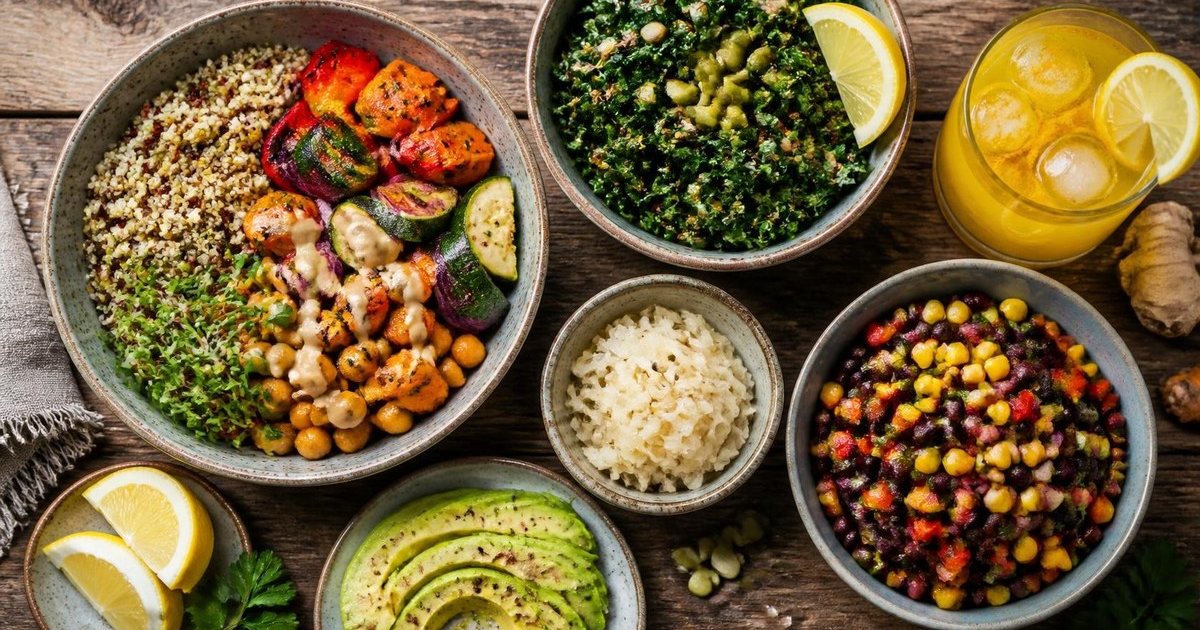
Quick answer: Skin doesn't age on a diet of creams alone. The best evidence for food points to five habits: eat colourful plants every day (tomatoes, carrots, berries, leafy greens) with a little olive oil, add a handful of nuts, have oily fish or plant omega-3s a few times a week, include a fermented food daily, and go easy on added sugar. Most of these work partly through your gut, the "gut-skin axis." Give it 8 to 12 weeks, and keep wearing sunscreen. Food supports skin; it doesn't replace sun protection.
My clients ask me about skin almost as often as they ask about bloating, and the two questions are more connected than most people think. When people ask me what they can eat for younger-looking skin, my answer comes from what I've seen in kitchens for years: the plate that helps your gut tends to show up on your face.
So here's my food-first take: what the research actually says, what it doesn't, and how to turn it into one easy plate.
Is there really a link between your gut and your skin?
Yes. Researchers call it the gut-skin axis. Your gut microbes help train your immune system and produce compounds, like short-chain fatty acids from fibre, that calm inflammation body-wide. A 2018 review in Frontiers in Microbiology describes the gut microbiome as "a major regulator" of skin balance, through immune signalling, inflammation and even the skin's own microbes.
The most exciting human data I know of comes from a 17-week trial published in Cell (2021). Adults who steadily increased fermented foods (yogurt, kefir, kimchi, sauerkraut, kombucha) saw their gut microbiome diversity go up and a range of inflammatory markers go down. It didn't measure skin, but lower background inflammation is exactly the environment you want for skin that repairs well.
The takeaway: feeding your gut well is one of the kindest things you can do for your skin.
Which foods help skin look younger?
Here are the seven I put on repeat, with the studies behind each one. I've kept the sizes honest: most are small studies, so think "promising," not "miracle."
1. Tomatoes, cooked, with olive oil
Tomatoes are rich in lycopene, a red carotenoid. In a randomised trial in the British Journal of Dermatology, women who ate 55 g of tomato paste in olive oil daily for 12 weeks were less prone to sun-induced redness than those who had olive oil alone. Cooking and a little fat make lycopene easier to absorb, so a simple tomato sauce counts.
2. Orange and red vegetables and fruits
Carrots, sweet potatoes, red peppers, pumpkin and squash carry beta-carotene, which your body turns into vitamin A, which is key for skin-cell renewal. A 2012 study in PLoS One found that adding about three portions of fruit and veg a day visibly warmed skin tone within six weeks, and people rated that glow as healthier-looking.
3. Mango, in a sensible portion
A small randomised pilot in Nutrients (2020) found that postmenopausal women who ate about 85 g of mango (roughly half a cup) four times a week for 16 weeks had less deep-wrinkle severity. The twist: a much bigger daily serving (250 g) went the other way. I love this study because it's a reminder that more isn't always better. Frozen mango chunks in a smoothie or on yogurt are perfect.
4. Vitamin C foods: berries, citrus, kiwi, peppers, broccoli
Vitamin C is essential for making collagen, the protein that keeps skin firm. A review in Nutrients explains how skin depends on a steady supply from food. And in a study of more than 4,000 women in the American Journal of Clinical Nutrition, higher vitamin C intake was linked to a lower likelihood of a wrinkled appearance and dryness.
5. A handful of almonds or walnuts
Nuts bring vitamin E, healthy fats and polyphenols. In a 16-week pilot and a larger 24-week follow-up, postmenopausal women who swapped their usual snacks for almonds had less wrinkle severity than a calorie-matched snack group. Walnuts add plant omega-3s on top, which is why they live in my oatmeal.
6. Oily fish or plant omega-3s
Salmon, sardines, mackerel, and for plant eaters, ground flax, chia and walnuts. Omega-3s help keep inflammation in check, and researchers are studying their role in protecting skin from UV stress. Two servings of oily fish a week is an easy, classic target.
7. Something fermented, every day
Plain yogurt, kefir, sauerkraut, kimchi, miso or a splash of kombucha. Per the Cell trial above, this is one of the most direct ways to support a diverse, calmer gut. Start with a spoonful or two and build up, especially if your gut is sensitive.
What should I eat less of for my skin?
Mostly: added sugar and ultra-processed snacks. Sugar can bind to collagen in a process called glycation, making it stiffer over time. The mango study hints at this, and the large NHANES analysis above linked higher intakes of refined carbohydrate with a more wrinkled appearance. An older Journal of the American College of Nutrition study found that people eating more vegetables, legumes, olive oil and fish had less skin wrinkling in sun-exposed areas, while diets heavy in sugary foods, full-fat dairy and processed meat went the other way.
No fear here. A birthday cake isn't the enemy. It's about what you eat most days.
How long does it take for food to change your skin?
Think two to three months. Skin renews itself slowly, and the studies above ran from 6 weeks (skin tone) to 12 to 24 weeks (redness and wrinkles). Consistency beats intensity: a good plate most days for 10 weeks will do more than a "perfect" week followed by a crash.
Do I still need sunscreen if I eat well?
Yes, always. Even the best tomato study showed only a modest protective effect. Food gives you a gentle, year-round baseline; it doesn't replace a broad-spectrum SPF 30+ sunscreen, shade and a hat, as the American Academy of Dermatology recommends.
My "glow plate": one easy way to put it together
When clients ask where to start, I give them one plate to repeat:
- Half the plate: colourful veg, like roasted carrots and peppers or a tomato-and-greens salad, with a drizzle of olive oil
- A quarter: protein, like salmon or sardines twice a week, or beans or lentils
- A quarter: fibre-rich carbs, like oats, quinoa, brown rice or sweet potato
- On top: a sprinkle of walnuts or ground flax
- On the side: a spoon of sauerkraut, a little yogurt, or kefir
- For dessert: berries or half a cup of mango
Aim for about 30 different plants a week. The American Gut Project linked that number to more diverse gut bacteria, and herbs, spices, nuts and seeds all count.
FAQ
What is the best food for younger-looking skin?
There's no single best food. The strongest pattern is a colourful, plant-rich diet with healthy fats: cooked tomatoes with olive oil, orange vegetables, berries and citrus, nuts, oily fish and a daily fermented food.
Can gut health affect your skin?
Yes. Research on the gut-skin axis shows gut microbes influence inflammation and immune signals that reach the skin. A fibre-rich diet with fermented foods supports a more diverse gut microbiome.
Which foods help the body make collagen?
Your body needs vitamin C to make collagen, so berries, citrus, kiwi, peppers and broccoli matter. It also needs enough protein from foods like fish, eggs, beans, lentils and yogurt.
Do collagen supplements work better than food?
Research on supplements is mixed, and many studies are industry-funded. I'm food-first: give your body vitamin C, protein and colourful plants, and talk with your healthcare provider before starting any supplement.
How fast will I see a difference in my skin?
Most studies saw changes after 6 to 16 weeks. Give a new way of eating at least two to three months, and keep using sunscreen daily.
Is it safe to add fermented foods if I have a sensitive gut?
Start small, with a spoonful or two a day, and build up slowly. If you have a medical condition, a weakened immune system or ongoing digestive symptoms, check with your healthcare provider first.
Warmly,
Birgit

Birgit Waites, M.S.
Birgit Waites, M.S. is a Celebrity Nutritionist with an M.S. in Natural Medicine and a Board Certified Holistic Health Practitioner (AADP). She teaches food-first, research-aware holistic health: real food and simple daily habits for your gut, skin, energy and hormones. These days she's traveling the world, cooking and writing as she goes.
Disclaimer
Educational, not medical advice. This article is for general wellness education only and isn't intended to diagnose, treat, cure or prevent any disease or skin condition. It is not a substitute for professional medical advice. Please talk with your physician, dermatologist or qualified healthcare provider before changing your diet or starting supplements, especially if you're pregnant or nursing, take medication or have a medical condition. Birgit Waites is not a medical doctor. Individual results vary.
Sources
- Salem I, et al. The Gut Microbiome as a Major Regulator of the Gut-Skin Axis. Front Microbiol. 2018. https://pubmed.ncbi.nlm.nih.gov/30042740/
- Wastyk HC, et al. Gut-microbiota-targeted diets modulate human immune status. Cell. 2021. https://pubmed.ncbi.nlm.nih.gov/34256014/
- Rizwan M, et al. Tomato paste rich in lycopene protects against cutaneous photodamage in humans in vivo. Br J Dermatol. 2011. https://pubmed.ncbi.nlm.nih.gov/20854436/
- Whitehead RD, et al. You are what you eat: within-subject increases in fruit and vegetable consumption confer beneficial skin-color changes. PLoS One. 2012. https://pubmed.ncbi.nlm.nih.gov/22412966/
- Fam VW, et al. Prospective Evaluation of Mango Fruit Intake on Facial Wrinkles and Erythema in Postmenopausal Women. Nutrients. 2020. https://pubmed.ncbi.nlm.nih.gov/33158079/
- Pullar JM, Carr AC, Vissers MCM. The Roles of Vitamin C in Skin Health. Nutrients. 2017. https://pubmed.ncbi.nlm.nih.gov/28805671/
- Cosgrove MC, et al. Dietary nutrient intakes and skin-aging appearance among middle-aged American women. Am J Clin Nutr. 2007. https://pubmed.ncbi.nlm.nih.gov/17921406/
- Foolad N, et al. Prospective randomized controlled pilot study on the effects of almond consumption on skin lipids and wrinkles. Phytother Res. 2019. https://pubmed.ncbi.nlm.nih.gov/31576607/
- Rybak I, et al. Prospective Randomized Controlled Trial on the Effects of Almonds on Facial Wrinkles and Pigmentation. Nutrients. 2021. https://pubmed.ncbi.nlm.nih.gov/33673587/
- Pilkington SM, et al. Omega-3 polyunsaturated fatty acids: photoprotective macronutrients. Exp Dermatol. 2011. https://pubmed.ncbi.nlm.nih.gov/21569104/
- Purba MB, et al. Skin wrinkling: can food make a difference? J Am Coll Nutr. 2001. https://pubmed.ncbi.nlm.nih.gov/11293471/
- McDonald D, et al. American Gut: an Open Platform for Citizen Science Microbiome Research. mSystems. 2018. https://pubmed.ncbi.nlm.nih.gov/29795809/
- American Academy of Dermatology. How to select a sunscreen. https://www.aad.org/public/everyday-care/sun-protection/shade-clothing-sunscreen/how-to-select-sunscreen