
Foods to Eat During Menopause: A Gut-Friendly List (and What to Limit)
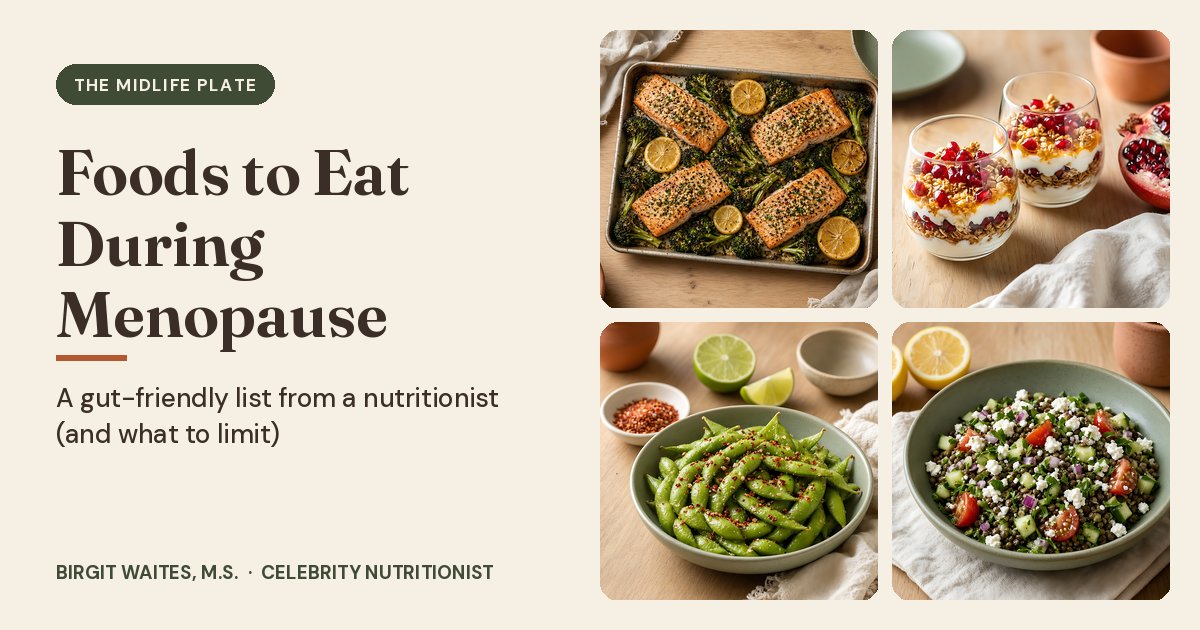
Quick answer: During perimenopause and menopause, build most meals around protein (eggs, fish, yogurt, beans, tofu), fiber-rich plants (vegetables, fruit, oats, lentils, aiming for 30 g a day or more), whole-food soy and flax (natural sources of phytoestrogens), calcium and vitamin D foods for your bones, healthy fats like olive oil, nuts and oily fish, and one fermented food a day for your gut. Many women also feel better when they limit alcohol, extra caffeine, spicy foods, added sugar and ultra-processed snacks. Food won't replace care from your doctor, but research suggests it may make this transition feel a lot smoother.
When women in midlife sit down with me, the first thing they say is almost always some version of: "I'm eating the same way I always have, and my body isn't responding the same way anymore." More bloating. A belly that wasn't there before. Sleep that falls apart at 3 a.m. A foggy brain by mid-afternoon.
You're not imagining it, and you're not failing. Your hormones are shifting, and research shows your gut is shifting with them. After 20+ years in holistic nutrition, here's my food-first, no-hype list: what to put on your plate, what to ease off, and how to make it simple enough to actually stick.
Why does menopause change what your body needs?
Estrogen does far more than run your cycle. It's involved in how your body handles blood sugar, where it stores fat, how it maintains muscle and bone, and even how your gut bacteria behave. As estrogen declines through perimenopause and into menopause, many women notice:
- Muscle is harder to keep, and metabolism feels slower.
- Bone density starts to drop faster than before.
- Weight shifts toward the middle, the "menopause belly" so many women search for.
- Digestion changes: more bloating, gas or irregularity.
- Sleep, mood and focus feel less predictable.
None of this means something is wrong with you. It means your plate has a new job: protect muscle and bone, steady blood sugar, feed your gut, and support your heart. The foods below do all four.
Does menopause change your gut?
Research suggests it does. A 2022 study in mSystems (Peters et al.) found that postmenopausal women had lower gut microbiome diversity than premenopausal women, and a gut-bacteria profile that looked more like men's. The researchers also saw changes in the estrobolome, the group of gut microbes that help your body process estrogen. It was an observational study, so it can't prove cause and effect, but it's one reason I put the gut at the center of every midlife plate.
Your gut bacteria eat what you eat, mostly fiber. So the simplest way to support a changing gut is to feed it more plants, more variety and a little fermented food every day.
The 7 best foods to eat during menopause
1. Protein at every meal (eggs, fish, Greek yogurt, beans, lentils, tofu)
If I could change one habit for women in midlife, it would be this: spread protein across the whole day, not just dinner. Protein helps you keep muscle, and muscle matters for strength, balance, blood sugar and healthy aging.
How much? According to UPMC, The Menopause Society recommends about 1.2 grams of protein per kilogram of body weight per day. For a 70 kg (154 lb) woman, that's roughly 84 g, or about 25–30 g per meal.
What 25–30 g looks like: - Breakfast: 1 cup Greek yogurt + 2 tbsp hemp seeds, or 3 eggs with spinach - Lunch: a big salad with 1 cup lentils or a palm-sized piece of salmon - Dinner: tofu or chicken stir-fry with plenty of vegetables
2. Fiber-rich plants: vegetables, fruit, oats, beans and whole grains
Fiber is your gut bacteria's favorite food, and it helps keep you full and your blood sugar steady. A 2023 review in Nutrients, summarized by UPMC, suggested 30 to 45 grams of fiber a day during perimenopause and menopause, added gradually. Most women I meet are nowhere near that.
Easy ways to get there: - Oats or chia pudding at breakfast (5–10 g) - Half a plate of vegetables at lunch and dinner - Beans or lentils most days (about 7–8 g per half cup) - A piece of fruit and a handful of nuts as a snack
Go slow. If you add a lot of fiber at once, you may feel more bloated at first. Add one new fiber food every few days and drink more water.
3. Whole-food soy and flax (natural phytoestrogens)
Soy foods like edamame, tofu, tempeh and soy milk, and ground flaxseed, contain plant compounds called phytoestrogens, which act a little like a gentle form of estrogen in the body. Research on soy and hot flashes is mixed but encouraging. UPMC describes a study in the journal Menopause where women eating a plant-based diet with daily soybeans reported far fewer severe hot flashes after 12 weeks. A Northwell Health handout suggests 2–3 servings of whole-food soy a week.
Try: a cup of edamame as a snack, tofu in a stir-fry, or 1–2 tbsp of ground flax in yogurt or a smoothie.
If you have a history of hormone-sensitive conditions, ask your doctor about soy and phytoestrogen foods before you add a lot of them.
4. Calcium and vitamin D foods for your bones
Bone loss speeds up around menopause. The U.S. National Institutes of Health lists 1,200 mg of calcium a day for women 51 and older. Food first: - Yogurt, kefir, milk or calcium-fortified plant milks - Tofu made with calcium sulfate - Canned sardines or salmon with the soft bones - Leafy greens like kale, bok choy and collards - Almonds and tahini
Vitamin D helps you use that calcium. Oily fish, eggs and fortified foods help, and your doctor can check your levels.
5. Healthy fats: olive oil, nuts, seeds, avocado and oily fish
Heart health becomes a bigger focus after menopause. Swap butter-heavy and fried foods for extra-virgin olive oil, avocado, walnuts, chia and flax, and have oily fish like salmon, sardines or mackerel about twice a week for omega-3 fats. Fat also makes vegetables tastier, which means you'll eat more of them.
6. One fermented food a day for your gut
Fermented foods with live cultures, like plain yogurt, kefir, raw sauerkraut, kimchi and miso, bring helpful microbes to a gut that may be losing diversity. Start with a spoonful of sauerkraut with lunch or a small glass of kefir, and build from there. Look for "live and active cultures" or "unpasteurized" on the label.
Want a simple place to start? My free Gut-Brain Starter Kit has 5 gut-loving foods and an easy 3-day menu.
7. Colorful plants and "30 plants a week"
Variety may matter as much as quantity. Every different plant you eat feeds a slightly different group of gut bacteria. A fun goal: 30 different plants a week, counting vegetables, fruit, beans, whole grains, nuts, seeds, herbs and spices. A handful of mixed seeds counts as three!
Colors to aim for: dark leafy greens, red and purple berries, orange carrots and sweet potatoes, cruciferous vegetables like broccoli and cauliflower, and beans of every color.
What foods should you avoid (or limit) during menopause?
You don't have to give anything up forever. These are the foods many women find make symptoms feel worse. Try easing off one at a time and notice what changes.
Alcohol
The British Nutrition Foundation notes that alcohol can trigger hot flushes, night sweats and headaches, and it affects sleep and bone health. Try alcohol-free days, or swap your evening glass for sparkling water with lime and mint.
Too much caffeine, especially late in the day
Caffeine can make hot flashes and sleep problems worse for some women. Keep coffee to the morning, try half-caf, or switch to herbal tea after lunch.
Very spicy foods
Spicy foods may bring on a hot flash in some women. If you notice a pattern, swap hot sauce for herbs like basil, thyme or fresh ginger.
Added sugar and refined carbs
White bread, pastries, sweet drinks and sugary cereals can cause blood-sugar spikes and dips that affect energy, cravings and mood. Northwell's nutrition handout suggests keeping added sugar under about 24 g (6 teaspoons) a day. Swap to whole grains, oats, potatoes with the skin on, or beans.
Ultra-processed snacks and processed meats
Packaged snacks, fast food and processed meats are often low in fiber and high in salt, sugar and refined fats (UPMC). They also crowd out the foods your gut loves.
Foods for menopause belly fat
No food melts belly fat, but your plate can make a real difference. As estrogen declines, fat tends to shift from the hips and thighs toward the abdomen, and your body burns fewer calories as you age (Cleveland Clinic). Cleveland Clinic's advice for "menopause belly" starts with meals built around whole, minimally processed foods like lean proteins, vegetables and other fiber-rich foods, with fewer highly processed foods and added sugars. On your plate, that looks like:
- Protein at every meal, about 25 to 30 grams for many women: eggs, Greek yogurt, fish, chicken, tofu, lentils. It helps protect the muscle that keeps your metabolism going.
- Fiber-rich plants at most meals: vegetables, beans, oats, berries and whole grains keep you full for longer.
- Healthy fats in sensible portions: olive oil, nuts, seeds and avocado.
- A closer look at your drinks. Cleveland Clinic points out that soda, alcohol, juice and specialty coffee drinks can add a lot of calories without making you feel satisfied.
Food works best alongside the rest: about 150 minutes of moderate activity a week, strength training (crunches alone can't reduce belly fat), sleep and stress care. If your weight changes quickly, talk with your healthcare provider, because thyroid problems and some medications can play a role too.
Menopause bloating: what to eat (and what to try cutting back)
Bloating is one of the most common digestive complaints in perimenopause and menopause. Estrogen can cause water retention, and shifting estrogen and progesterone can speed up or slow down how food moves through your gut, which can mean more gas (Cleveland Clinic). In a Cleveland Clinic podcast on digestive issues during menopause, a dietitian suggests more fiber, probiotic foods and water, fewer trigger foods like caffeine, alcohol and high-fat meals, and regular movement.
What to try:
- Add fiber slowly. Increase beans, oats and vegetables a little at a time and drink more water, so your gut has time to adjust.
- Have a fermented food most days, like yogurt, kefir or sauerkraut.
- Eat smaller meals and chew well. Cleveland Clinic's bloating tips include chewing more and skipping second helpings, and a short walk after eating can help move things along.
- Try cutting back on alcohol, extra caffeine and large, high-fat meals for a couple of weeks, one at a time, and notice what changes.
When to check with your doctor: in the same podcast, the dietitian advises seeing a provider if bloating, gas or cramping lasts more than a few weeks, and promptly for red-flag symptoms like blood in your stool, unexplained weight loss or persistent or severe abdominal pain.
My free 5 Midlife Food Habits guide turns these ideas into five simple habits, with a sample day and a recipe.
A sample menopause meal plan for one day
| Meal | What to eat | Why it helps |
|---|---|---|
| Breakfast | Greek yogurt with berries, 1 tbsp ground flax and walnuts | Protein, calcium, fiber, phytoestrogens, omega-3s |
| Lunch | Big salad: leafy greens, lentils, roasted vegetables, olive oil + lemon, a spoonful of sauerkraut | Fiber, plant protein, a fermented food |
| Snack | 1 cup edamame or an apple with almond butter | Protein + fiber to keep blood sugar steady |
| Dinner | Baked salmon, roasted broccoli and a scoop of quinoa or brown rice | Omega-3s, calcium-friendly greens, whole grains |
| Evening | Herbal tea (chamomile or peppermint) | A caffeine-free wind-down |
The Midlife Plate, in one picture: half vegetables, a quarter protein, a quarter beans or whole grains, plus a thumb of healthy fat and a spoonful of something fermented.
In my book Nourished Through the Change, I turn this into a 4-week meal plan with weekly shopping lists and 72 high-protein recipes, each with a plant-based swap.
How to track what works for your body
Every woman's menopause is different. What triggers a hot flash for your friend may do nothing for you. The most useful thing you can do is notice your own patterns for a few weeks: what you ate, how you slept, your energy, your mood, and any symptoms.
That's exactly why I made a free 12-Week Food & Mood Journal for midlife. It has simple daily trackers and a "Questions for My Doctor" page, so you walk into your next appointment with real notes instead of guesses.
Frequently asked questions
What is the best diet for menopause?
There isn't one perfect "menopause diet," but research points to the same pattern again and again: mostly whole foods, plenty of vegetables, fruit, beans and whole grains, enough protein at every meal, healthy fats like olive oil and oily fish, and less alcohol, added sugar and ultra-processed food. A Mediterranean-style way of eating fits this well.
What foods help with menopause belly fat?
No single food targets belly fat. Meals built around protein and fiber, like eggs with vegetables, lentil salads or salmon with greens, may help you feel full and keep blood sugar steadier, which many women find helps with midsection weight. Go easy on sugary drinks and alcohol, and pair your plate with strength training and good sleep.
What causes menopause bloating?
Shifting estrogen and progesterone can cause water retention and change how fast food moves through your gut, which can mean more gas. Slower digestion and constipation can add to it. Adding fiber slowly with plenty of water, a fermented food most days, smaller meals and a walk after eating may help. See your doctor if bloating lasts more than a few weeks or comes with pain, blood in your stool or weight loss.
How much protein do I need during menopause?
UPMC reports that The Menopause Society recommends about 1.2 grams of protein per kilogram of body weight per day. For many women, that's roughly 25 to 30 grams at each meal. Ask your healthcare provider what's right for you, especially if you have kidney concerns.
Does menopause affect gut health?
Research suggests it can. A 2022 study in mSystems found that postmenopausal women had lower gut microbiome diversity than premenopausal women. Eating a wide variety of fiber-rich plants and a fermented food daily may help support a healthy gut.
Are phytoestrogen foods safe during menopause?
For most women, whole-food sources like edamame, tofu, tempeh and ground flaxseed can be part of a healthy diet, and some research links soy to fewer hot flashes. If you have a history of hormone-sensitive conditions, talk with your doctor before adding a lot of them.
What should I eat during perimenopause?
The same foundations apply in perimenopause: protein at every meal, plenty of fiber, calcium-rich foods, healthy fats and a fermented food daily. Perimenopause is the perfect time to start these habits, before the bigger hormonal shifts of menopause.
What foods make menopause symptoms worse?
Many women find that alcohol, too much caffeine, very spicy foods and lots of added sugar make hot flashes, sleep or energy worse. Triggers differ from person to person, so tracking your symptoms for a few weeks is the best way to learn yours.
Your next step
You don't need to overhaul your whole kitchen this week. Pick one change: protein at breakfast, a spoonful of sauerkraut at lunch, or one alcohol-free evening. Do it for seven days, and notice how you feel.
- 🎁 Download my free Menopause Journal to track what helps you.
- 🥗 Get the free Gut-Brain Starter Kit for 5 gut-loving foods and a 3-day menu.
- 📚 Browse all my free guides, including 5 Midlife Food Habits and the 12-Week Food & Mood Journal.
- 📘 Ready for the full plan? Nourished Through the Change gives you 72 high-protein recipes, a 4-week meal plan and shopping lists ($9.99, instant download).
- ▶️ Prefer video? Subscribe on YouTube for The Midlife Plate, my weekly series on midlife nutrition.

Birgit Waites, M.S.
Birgit Waites, M.S. is a Celebrity Nutritionist with an M.S. in Natural Medicine and a Board Certified Holistic Health Practitioner (AADP), with 20+ years of experience in holistic nutrition. She's the author of Nourished Through the Change and Healing From Within, and these days she's traveling the world, cooking and writing as she goes.
Disclaimer
This article is for educational purposes only and isn't medical advice. Please talk with your healthcare provider before changing your diet, especially if you have a medical condition or take medication.