
Natural GLP-1 Foods: What Research Says About Protein, Fiber and Feeling Full
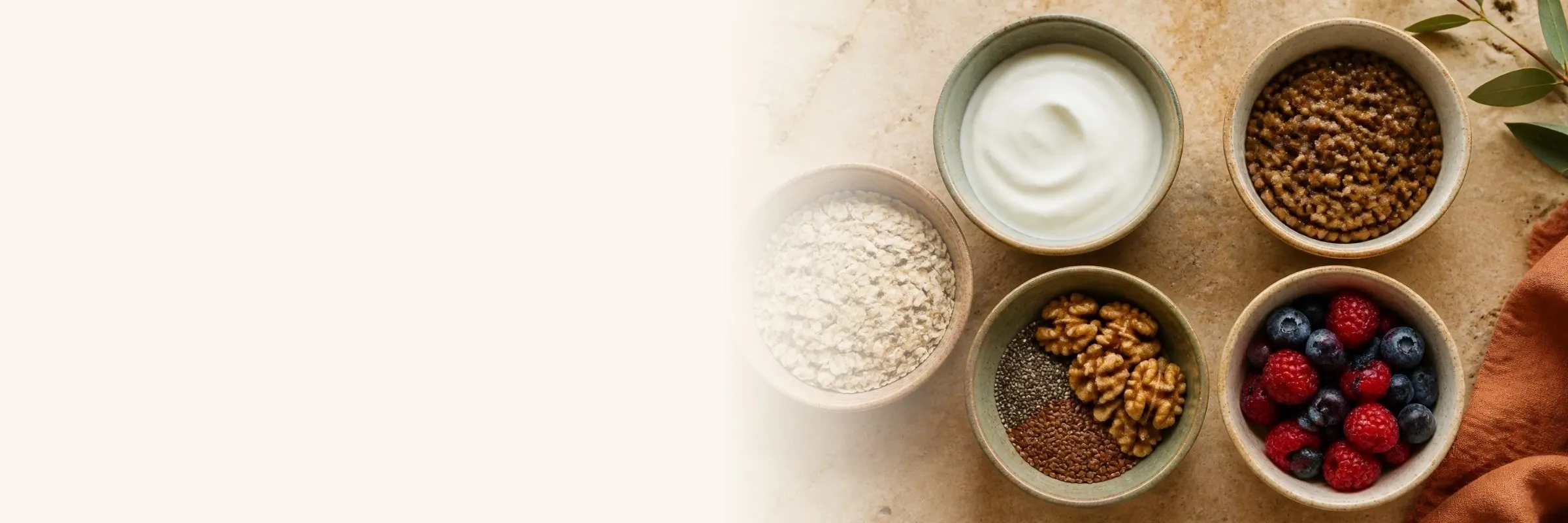
Quick answer: Your gut makes its own GLP-1, a fullness hormone, every time you eat. The foods research links most often to that natural response are protein (eggs, Greek yogurt, fish, tofu, beans), fermentable fiber (oats, barley, beans, lentils, onions, garlic, chia and flax), fermented foods (yogurt, kefir, kimchi, sauerkraut), healthy fats (olive oil, avocado, nuts, oily fish) and colorful plants like berries. Eating your vegetables and protein before your starches may help too. Food won't work like a GLP-1 medication, and it isn't meant to, but these foods may support steadier appetite, energy and gut health for men and women alike.
"Natural GLP-1" has become one of the fastest-rising food searches of the year. In my own Google Trends check, US interest in the phrase roughly doubled over the past 12 months, and the top searches around it are mostly supplements and powders. Men and women both ask me about it. Some take a GLP-1 medication; most simply wonder whether food can do some of the same job.
Here's the honest, food-first answer from my 20+ years in holistic nutrition: there's no magic food and no "natural Ozempic." But there is a real, research-backed way of eating that works with your body's own fullness signals. It also happens to be great for your gut. Let's walk through it.
What is GLP-1, and what does "natural GLP-1" actually mean?
GLP-1 (glucagon-like peptide-1) is a hormone your own gut releases after you eat. Special cells in your intestines, called L-cells, send it out when food arrives, especially protein, fats and the fiber your gut bacteria ferment. GLP-1 helps signal fullness, slows how fast your stomach empties and helps your body manage blood sugar after a meal.
A 2025 joint advisory from four nutrition and obesity societies (Mozaffarian et al.) explains that GLP-1 levels in the blood rise about 2 to 4 times after eating, but the hormone is broken down within 1 to 2 minutes. That's why GLP-1 medications were designed to last much longer than the version your body makes.
So when people say "natural GLP-1," they usually mean one of two things:
- Foods and habits that support your body's own GLP-1 response. That's what this article is about.
- Supplements marketed as "GLP-1 boosters." That's a different conversation, and I'll come back to it below.
Can food really boost GLP-1?
Research suggests certain foods can nudge your natural GLP-1 response, but the effect is modest and short-lived compared with medication. A 2026 review in Nutrients (Foods as Modulators of GLP-1 Secretion) found that fermented dairy, kimchi, kefir, oats, garlic, onions, chicory root, berries, grapes, green tea and oily fish all appear to support GLP-1 release, largely through your gut bacteria. The same review is clear that diet's effect is "modest compared with" GLP-1 medications.
A 2026 scoping review in Frontiers in Endocrinology (Dietary fibers to boost endogenous GLP-1 secretion and satiety) looked at 52 human studies of single fibers. Results were mixed: some fibers raised GLP-1, some improved fullness, and few did both. Most studies were small and short.
My takeaway: don't chase one "GLP-1 food." Build meals that combine protein, fiber, fermented foods and healthy fat. That's where the research points, and it's good for your gut and energy either way.
The 9 best natural GLP-1 foods to eat more often
1. Protein at every meal: eggs, Greek yogurt, fish, chicken, tofu, beans
Protein is one of the strongest triggers for fullness. The Ohio State University Wexner Medical Center lists protein first among foods that promote GLP-1 release and help you feel full on less food.
Easy wins: two or three eggs at breakfast, a cup of Greek yogurt or cottage cheese as a snack, a palm-sized piece of fish or chicken at dinner, or a cup of lentils or tofu if you eat plant-based.
2. Oats and barley (beta-glucan fiber)
Oats and barley are rich in beta-glucan, a soluble fiber that thickens in your gut, slows digestion and feeds your gut bacteria. In the Frontiers review, beta-glucans showed fairly consistent effects on fullness. A bowl of oats with yogurt and berries is one of my favorite "natural GLP-1" breakfasts.
3. Beans, lentils, chickpeas and split peas
Legumes are the rare food that brings protein and fermentable fiber together: about 7 to 8 g of fiber per half cup. Your gut bacteria turn that fiber into short-chain fatty acids, which the joint advisory notes can stimulate GLP-1 release from the colon. If beans make you gassy, start with 2 to 3 tablespoons and build up over a few weeks.
4. Onions, garlic, leeks, asparagus and artichokes (inulin-rich vegetables)
These vegetables are naturally high in inulin and other prebiotic fibers, the food your helpful gut bacteria love most. The Nutrients review lists onions, garlic, chicory root and Jerusalem artichokes among foods that support GLP-1 through fermentation. Cook a big batch of onions and garlic as the base for soups, stews and sauces.
5. Chia seeds and ground flaxseed
Tiny seeds, big fiber: 2 tablespoons of chia seeds give you about 8 g of fiber, plus plant omega-3 fats. Ohio State lists chia and flax under both fiber and healthy fats. Stir them into yogurt, oats or a smoothie.
6. Olive oil, avocado and nuts
Healthy fats slow stomach emptying and help you feel satisfied. Ohio State notes that monounsaturated fats and omega-3s increase GLP-1 release. A drizzle of extra-virgin olive oil on vegetables, half an avocado at lunch, or a small handful of walnuts or almonds all count.
7. Oily fish: salmon, sardines, mackerel, trout
Oily fish brings protein and omega-3 fats in one food, and both appear in the GLP-1 research. Aim for oily fish about twice a week. Canned salmon and sardines are budget-friendly options.
8. Fermented foods: yogurt, kefir, kimchi, sauerkraut, miso
Fermented foods with live cultures bring helpful microbes to your gut, and fermented dairy, kefir and kimchi appear in the Nutrients review. Start with one small serving a day, like a spoonful of sauerkraut with lunch or a small glass of kefir. Look for "live and active cultures" or "unpasteurized" on the label.
9. Berries, green tea and other colorful plants
Berries, grapes and green tea are rich in polyphenols, plant compounds that early research links to GLP-1 activity. The evidence here is earlier-stage, so think of these as a bonus, not the main event. They add color, fiber and flavor.
A note on "resistant starch": you may have seen advice to cook and cool your potatoes or rice. Resistant starch does feed gut bacteria, but in the Frontiers review it was the most-studied fiber and showed the least consistent effect on GLP-1 and fullness. Enjoy it, but don't count on it.
Does the order you eat your food matter?
It may. Eating vegetables and protein before starches is a free habit with a small but real study behind it. In a 2017 study in BMJ Open Diabetes Research & Care (Shukla et al.), 16 adults with type 2 diabetes ate the same meal three ways. When they ate the chicken and salad first and the bread and juice 10 minutes later, their post-meal blood sugar peak was about 54% lower, and their GLP-1 response was higher than when they ate the carbs first.
That's one small study in people with diabetes, so it doesn't prove that meal order changes weight or appetite over time. But it costs nothing to try: start with your salad or vegetables, then your protein, then your bread, rice or potatoes.
How much protein and fiber do you need?
Fiber: most adults fall far short
US guidelines recommend about 14 g of fiber for every 1,000 calories. That works out to roughly 25 g a day for many women and 38 g for many men, with lower targets after 50. According to the American Society for Nutrition, only 5% of men and 9% of women in the US reach their fiber goal.
Go slow: add one new fiber food every few days and drink more water. Adding a lot at once often means more bloating, not less.
Protein: spread it through the day
The joint advisory lists the basic recommended allowance as 0.8 g of protein per kilogram of body weight per day, with 1.2 to 1.6 g/kg proposed during active weight loss. For many people, a practical target is about 25 to 30 g of protein at each meal, and a little more for larger, active men. If you're in midlife, my article on foods to eat during menopause goes deeper on protein for women. Check with your healthcare provider about your own numbers, especially if you have kidney concerns.
A natural GLP-1 plate and a one-day sample menu
The Natural GLP-1 Plate: half vegetables (start here), a palm or two of protein, a cupped hand of beans, lentils, oats or whole grains, a thumb of healthy fat, and a spoonful of something fermented.
| Meal | What to eat | Why it helps |
|---|---|---|
| Breakfast | Greek yogurt with oats, berries, 1 tbsp chia and walnuts, or 3 eggs with sautéed onions and spinach | Protein + beta-glucan or prebiotic fiber + healthy fat |
| Lunch | Big salad first, then lentils or salmon, olive oil and lemon, a spoonful of sauerkraut | Veggies first, protein, fermentable fiber, a fermented food |
| Snack | Kefir, or an apple with almond butter | Protein or fiber with fat keeps you steady |
| Dinner | Roasted asparagus and garlic, then baked salmon or tofu, then a small scoop of barley or brown rice | The "carbs last" order, omega-3s, inulin-rich vegetables |
| Evening | Green tea earlier in the day, herbal tea after dinner | Polyphenols without late caffeine |
Want this as an easy habit plan? My free 5 Protein-First Habits guide has a small-appetite sample day and my Protein Berry Overnight Oats.
What about "natural GLP-1" supplements and drinks?
No supplement or drink has been shown to work like a GLP-1 medication. Many of the top "natural GLP-1" searches right now are for branded supplements, and the marketing can be loud. Most rely on fibers or plant extracts with only small, short studies behind them.
Some supplements can be helpful in certain situations, and I'll always tell you honestly when the research supports one. For GLP-1, the strongest everyday evidence is still on your plate. If you're considering a supplement, check the ingredients against the foods above, and talk with your healthcare provider first, especially if you take medication.
If you take a GLP-1 medication, what should you eat?
Food can't replace your medication, but it can help you get the nutrition you need on a smaller appetite. The joint advisory highlights a few priorities you can talk through with your prescriber:
- Eat protein first at each meal, so you get enough before you feel full.
- Choose small, regular meals rather than going hours without eating.
- Build in fiber gradually and drink enough fluids.
- Favor whole, minimally processed foods: fruits, vegetables, whole grains, beans, dairy, fish, eggs, nuts and seeds.
- Pair food with strength training to help protect muscle.
Please don't change a medication based on a blog post. Your prescriber and a registered dietitian can tailor this to you.
What to eat on GLP-1 when you're not hungry
When your appetite is very low, think small, soft and protein-first. The 2025 joint advisory (Mozaffarian et al.) notes that small, frequent meals may work best when hunger and interest in food are low, and that smoothies, protein drinks, cottage cheese and soups are often more appealing than heavier foods like red meat, cold cuts or hard cheeses. Ideas to talk through with your prescriber or dietitian:
- Start with a small breakfast, then eat a little every 3 to 4 hours. Skipping meals can feed a cycle of nausea and not eating. A phone reminder helps if you forget.
- Drink your protein when chewing feels like too much: a smoothie made with Greek yogurt or milk, fruit and a handful of spinach.
- Keep soft, high-protein foods on hand: Greek yogurt, cottage cheese, eggs, flaky fish like salmon, tofu, and lentil or bean soups.
- Eat the protein on your plate first, so the most important part goes in before you feel full.
- Sip fluids through the day. The advisory notes ginger or peppermint tea can help with queasiness.
- Keep meals small and go easy on large or high-fat meals, which can make vomiting or diarrhea more likely.
- Add fiber gradually with plenty of water. Prunes or other dried fruit can help if you get constipated.
- Keep alcohol to a minimum. It may worsen nausea and reflux.
A small-appetite day could look like this: Greek yogurt with berries and ground flax for breakfast, a protein smoothie mid-morning, a cup of lentil soup and a boiled egg at lunch, cottage cheese with soft fruit in the afternoon, and a small piece of salmon with soft-cooked vegetables at dinner.
My free 5 Protein-First Habits guide has a full small-appetite sample day. If you can't keep food or fluids down, or you feel dizzy or very weak, contact your prescriber right away.
Frequently asked questions
What foods boost GLP-1 naturally?
Research most often points to protein (eggs, yogurt, fish, tofu, beans), fermentable fiber (oats, barley, beans, lentils, onions, garlic, chia, flax), fermented foods (yogurt, kefir, kimchi, sauerkraut), healthy fats (olive oil, avocado, nuts, oily fish) and polyphenol-rich foods like berries and green tea. The effect is modest, so combining them in balanced meals matters more than any single food.
How can I increase GLP-1 naturally?
Eat protein at every meal, build in fermentable fiber (oats, barley, beans, lentils, onions, garlic, chia, flax), add a fermented food and some healthy fat, and try eating your vegetables and protein before your starches. Regular meals rather than long gaps help too. Research suggests these habits nudge your body's own GLP-1 modestly; they won't work like a medication.
Is there a natural Ozempic?
No. No food, tea or supplement has been shown to work like semaglutide (Ozempic or Wegovy). The GLP-1 your gut makes breaks down within minutes, while the medications are designed to last far longer. Berberine is often called "nature's Ozempic," but Harvard Health says there's no rigorous scientific evidence that it suppresses appetite or promotes weight loss, and it can cause diarrhea, constipation, gas and upset stomach and change how some medications work. UCLA Health adds that it works differently from GLP-1 drugs and the evidence is inconclusive. Please talk with your doctor or pharmacist before trying it.
Does eating vegetables before carbs help?
It may. In a small 2017 study of 16 adults with type 2 diabetes, eating protein and vegetables 10 minutes before carbohydrates led to a lower blood sugar peak and a higher GLP-1 response. It's a free habit worth trying, though it hasn't been shown to change weight on its own.
How much fiber do I need per day?
US guidelines suggest about 14 g per 1,000 calories, or roughly 25 g a day for many women and 38 g for many men, with lower targets after 50. Increase fiber slowly and drink more water to keep your gut comfortable.
What should I eat if I take a GLP-1 medication?
Expert groups suggest eating protein first, choosing small regular meals, adding fiber gradually, drinking enough fluids and favoring whole foods, along with strength training. On low-appetite days, soft protein foods like Greek yogurt, cottage cheese, eggs, smoothies and soups are often easier. Talk with your prescriber or a registered dietitian about your own plan.
Your next step
You don't need a new product to start. Pick one habit for the next seven days: protein at breakfast, vegetables first at dinner, or one new fiber food. Notice how full and steady you feel.
- 🎁 Get my free 5 Protein-First Habits guide for a small-appetite sample day and an easy high-protein recipe.
- 📚 Browse all my free guides, including the Gut-Brain Starter Kit, 5 Steady-Energy Habits and the Testosterone Plate grocery list for men.
- 🌿 Ready for a full plan? My 21-Day Gut Reset walks you through fiber, fermented foods and daily habits one small step at a time, with a 7-day meal plan, 32 recipes and shopping lists.
- ▶️ Prefer video? Subscribe on YouTube for weekly real-food nutrition.

Birgit Waites, M.S.
Birgit Waites, M.S. is a Celebrity Nutritionist with an M.S. in Natural Medicine and a Board Certified Holistic Health Practitioner (AADP), with 20+ years of experience in holistic nutrition. She's the author of several books on real-food nutrition and gut health, and these days she's traveling the world, cooking and writing as she goes.
Disclaimer
This article is for educational purposes only and isn't medical advice. Please talk with your healthcare provider before changing your diet or starting a supplement, especially if you have a medical condition or take medication, including a GLP-1 medication.