
Foods That Increase Testosterone Naturally: A Grocery List for Men
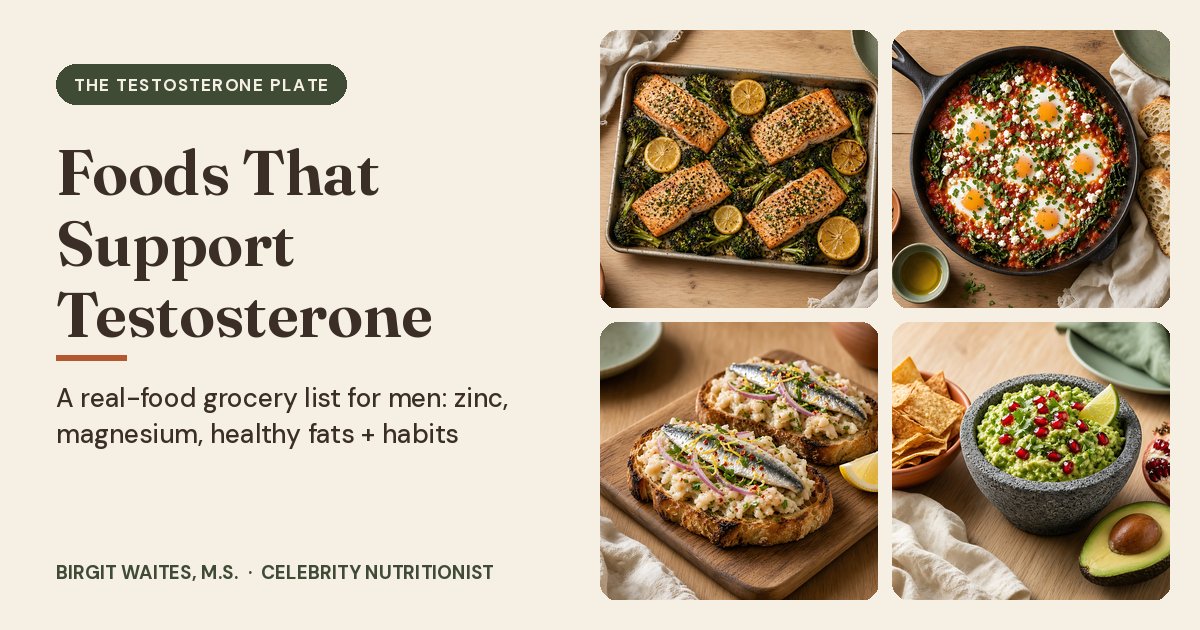
Quick answer: No single “miracle” food or over-the-counter booster acts like hormone replacement, and low testosterone is a medical diagnosis only a doctor can confirm. However, research shows that correcting key nutrient gaps—especially zinc, magnesium, vitamin D, boron and omega-3 fats—while eating a whole-food Mediterranean-style plate (oysters, wild salmon, sardines, pasture-raised eggs, extra-virgin olive oil, avocados, pumpkin seeds, Brazil nuts, walnuts, cruciferous vegetables, pomegranate, garlic, onions and dark leafy greens) helps support your body's natural testosterone production, especially alongside 7 to 8 hours of sleep, strength training and healthy cortisol management.
Every week, thousands of men search for foods that increase testosterone naturally—and almost everything they find online falls into one of two extremes: either sketchy supplement ads promising overnight miracles, or dry articles saying diet doesn't matter at all.
After 20+ years in holistic nutrition, here is the honest middle ground backed by human research: there is no magic single food that overrides five hours of sleep, heavy drinking or chronic stress, but what you put on your plate every day provides the literal raw materials your body uses to make, transport and protect testosterone. Even more importantly, a protein-first, nutrient-dense grocery list helps support healthy body composition, steady blood sugar and lower stress hormones—three of the biggest upstream levers for men's vitality after 35, 40 and 50.
At a Glance: What the Science Shows
- Micronutrient deficiencies directly lower testosterone: In a classic human study (Nutrition, Prasad et al., 1996), restricting dietary zinc in young men lowered serum testosterone significantly within 20 weeks, while restoring zinc in marginally zinc-deficient older men nearly doubled their serum testosterone levels.
- Magnesium supports free and total testosterone: In a 4-week study of sedentary and athletic men (Biological Trace Element Research, Cinar et al., 2011), magnesium intake increased both free and total testosterone levels, with the strongest results in men who exercised regularly.
- Extra-virgin olive oil outperforms refined fats: In a dietary intervention in young men (Natural Product Communications, Derouiche et al., 2013), switching to daily extra-virgin olive oil or argan oil for 3 weeks significantly increased serum testosterone and luteinizing hormone (LH).
- One week of 5-hour sleep drops daytime testosterone by 10% to 15%: In a controlled laboratory study at the University of Chicago (JAMA, Leproult & Van Cauter, 2011), restricting healthy young men to 5 hours of sleep per night for just one week reduced daytime testosterone levels by 10% to 15%.
1. Key Micronutrients & Healthy Fats That Support Testosterone Production
Testosterone is a steroid hormone synthesized from cholesterol through a cascade of enzyme steps in the Leydig cells of the testes, signaled by luteinizing hormone (LH) from the brain. If your kitchen runs low on the minerals, vitamins and healthy fats that power those enzymes, your body's natural hormone rhythm feels the bottleneck first.
| Nutrient | Why It Matters for Men's Hormone Health | Daily Target (NIH ODS, Adult Men) | Top Whole-Food Sources |
|---|---|---|---|
| Zinc | Essential cofactor for steroidogenic enzymes that convert cholesterol into testosterone (Prasad et al., 1996) | 11 mg/day | Oysters, grass-fed beef, pumpkin seeds, hemp seeds, crab, lentils, chickpeas |
| Magnesium | Reduces sex-hormone-binding globulin (SHBG) binding so more testosterone stays bioavailable; helps regulate cortisol (Cinar et al., 2011) | 400–420 mg/day | Roasted pumpkin seeds (156 mg/oz), chia seeds, spinach, Swiss chard, black beans, almonds, dark cacao |
| Vitamin D | Vitamin D receptors are present in reproductive tissues; a 1-year randomized controlled trial (Hormone and Metabolic Research, Pilz et al., 2011) found vitamin D supplementation supported testosterone in men with low baseline levels | 600–800 IU/day (ask your doctor to test blood 25(OH)D) | Wild sockeye salmon, sardines, mackerel, pasture-raised egg yolks, UV-exposed mushrooms |
| Boron | Trace mineral involved in steroid hormone metabolism and vitamin D utilization; a human pilot study (Journal of Trace Elements in Medicine and Biology, Naghii et al., 2011) linked boron to higher free testosterone | 3–6 mg/day from food | Avocados, raisins, prunes, almonds, walnuts, chickpeas, apples, pears |
| Selenium | Antioxidant mineral that protects Leydig cells from oxidative stress during hormone synthesis | 55 mcg/day | 1 to 2 Brazil nuts (68–91 mcg per nut), wild fish, eggs, sunflower seeds |
| Omega-3 & Monounsaturated Fats | Support healthy cell membranes and testicular volume (Minguez-Alarcon et al., JAMA Network Open, 2020) | Daily food foundation | Extra-virgin olive oil, avocados, wild salmon, sardines, walnuts, flax & chia |
2. The Testosterone Grocery List for Men (Sorted by Category)
When men ask me what to actually put in their basket, I point them to my free Testosterone Plate Grocery List & 3-Day Starter. Here is the complete aisle-by-aisle food list and why each group earns its spot on your plate:
1. Shellfish & Wild Oily Fish (Oysters, Wild Salmon, Sardines, Mackerel)
- Oysters are the undisputed king of dietary zinc—just 3 ounces of cooked oysters provide 28 to 74 mg of zinc (NIH ODS), along with selenium, copper and vitamin B12. Canned smoked oysters on seeded sourdough toast make an easy, budget-friendly lunch.
- Wild salmon, sardines and mackerel deliver long-chain omega-3s (EPA and DHA) plus vitamin D and high-quality protein. Aim for two to three servings of oily fish a week.
2. Pasture-Raised Whole Eggs & Grass-Fed Meats
- Whole eggs (don't throw away the yolk!) supply dietary cholesterol (the building block of steroid hormones), choline, vitamin D, selenium and 6 to 7 grams of complete protein per egg.
- Lean grass-fed beef, bison or lamb (1 to 2 times a week in sensible 4- to 6-ounce portions) provides highly absorbable heme iron, zinc, B12 and carnitine. Pair red meat with plenty of colorful vegetables and herbs.
3. Cruciferous Vegetables (Broccoli, Brussels Sprouts, Cabbage, Bok Choy, Kale)
- Why are vegetables on a testosterone foods for men list? Because men make estrogen too—through an enzyme called aromatase, which is concentrated in visceral belly fat. Cruciferous vegetables are rich in glucosinolates (which break down into indole-3-carbinol and sulforaphane) and prebiotic fiber that help your liver and gut metabolize and clear excess estrogens efficiently.
- Kitchen tip: Chop broccoli or Brussels sprouts 10 minutes before cooking, then roast with extra-virgin olive oil and garlic, or add a forkful of raw sauerkraut or kimchi alongside dinner.
4. Healthy Fats: Extra-Virgin Olive Oil, Avocados, Pumpkin Seeds, Brazil Nuts & Walnuts
- Very low-fat diets consistently lower men's testosterone in clinical studies. A systematic review and meta-analysis (Journal of Steroid Biochemistry and Molecular Biology, Whittaker & Wu, 2021) found that switching men to a low-fat diet decreased total and free testosterone by 10% to 15% compared with higher healthy-fat diets.
- Make extra-virgin olive oil your default cooking and dressing oil, add ½ an avocado (rich in monounsaturated fat and boron) to lunch, and keep a jar of roasted pumpkin seeds (pepitas), walnuts and Brazil nuts on your counter.
5. Pomegranate, Berries & Dark Cacao (Nitric Oxide & Polyphenol Support)
- Pomegranate juice and arils, wild blueberries and 85%+ dark chocolate are loaded with polyphenols that protect nitric oxide (supporting healthy blood flow and endothelial function) and cushion Leydig cells from oxidative stress (Ammar et al., Biomedicine & Pharmacotherapy, 2017).
6. Garlic, Onions, Shallots & Fresh Ginger
- Onions, garlic and leeks provide prebiotic inulin fiber (for your gut microbiome) and quercetin flavonoids. Fresh ginger has been studied in human and clinical research for supporting antioxidant status and reproductive health (Banihani, Biomolecules, 2018). Use garlic, onion and ginger generously in skillets, soups and marinades.
7. Dark Leafy Greens & Legumes (Spinach, Swiss Chard, Arugula, Black Beans, Lentils)
- Spinach and Swiss chard are packed with magnesium, folate and dietary nitrates (which your body converts into nitric oxide for circulation and workout stamina).
- Black beans, chickpeas and lentils provide magnesium, zinc, boron and fermentable fiber that help keep blood sugar and waistlines steady (see my Gut Health Foods List).
3. Foods That Lower Testosterone (and 5 Everyday Habits That Drain It)
When men search for foods that lower testosterone, they often worry about a single ingredient like soy or mint. In reality, a large meta-analysis of 41 clinical studies (Reproductive Toxicology, Reed et al., 2021) confirmed that normal whole soy foods do not lower men's testosterone. What actually drains testosterone day after day is a combination of five metabolic and lifestyle stressors:
- Chronic Sleep Debt (Under 6 Hours a Night): Most of a man's daily testosterone release happens during deep and REM sleep. As the University of Chicago trial showed (Leproult & Van Cauter, JAMA, 2011), sleeping 5 hours a night for one week lowered young men's testosterone by 10% to 15%—equivalent to aging 10 to 15 years.
- Heavy or Nightly Alcohol: Alcohol is directly toxic to Leydig cells, increases the conversion of testosterone into estrogen via aromatase, and fragments second-half sleep (Emanuele & Emanuele, Alcohol Health & Research World, 1998). Try 4 to 5 alcohol-free nights a week.
- Excess Added Sugar, Sugary Drinks & Visceral Belly Fat: High-sugar diets drive insulin resistance and deep abdominal (visceral) fat. Visceral fat acts like an endocrine organ: it produces inflammatory cytokines and high levels of aromatase, converting testosterone into estradiol. Even worse, an acute oral glucose load temporarily drops circulating testosterone by up to 25% for two hours in men across all glucose tolerances (Caronia et al., Clinical Endocrinology, 2013).
- Ultra-Processed Foods & Trans/Oxidized Fats: Diets dominated by ultra-processed packaged snacks, fast food and trans fats are linked in observational studies to lower testicular function and higher inflammation (Nassan et al., Human Reproduction, 2020).
- Chronic Unmanaged Stress & High Cortisol: Cortisol and testosterone work like a seesaw—when chronic stress keeps your HPA axis on high alert, reproductive hormone signaling takes a back seat. Read my full guide on Foods That Lower Cortisol Levels Naturally for the magnesium chart and 3-minute breathing resets.
4. How to Build “The Testosterone Plate” (1-Day Sample Plan for Men)
You don't need separate meals from the rest of the family. Build your plate around 30 to 40 grams of protein per meal, 2 cups of colorful or cruciferous vegetables, a generous thumb of extra-virgin olive oil, avocado, nuts or seeds, and slow-digesting whole-food carbohydrates:
| Meal | What to Eat | Key Testosterone-Supportive Nutrients |
|---|---|---|
| Breakfast | Steak & Eggs (or Salmon & Eggs) Power Skillet: 3 pasture-raised whole eggs cooked in extra-virgin olive oil with sautéed onions, garlic, baby spinach, cherry tomatoes and ½ avocado + ½ cup berries on the side | Dietary cholesterol, vitamin D, choline, ~80 mg magnesium, boron, quercetin & ~30 g protein |
| Lunch | Mediterranean Sardine or Grilled Chicken Quinoa Bowl: 1 tin wild sardines (or 6 oz grilled chicken thigh) over cooked quinoa, arugula, chickpeas, cucumber, Kalamata olives, 2 tbsp roasted pumpkin seeds & olive oil-lemon dressing + 1 forkful raw sauerkraut | Omega-3s, 156 mg magnesium from pumpkin seeds, zinc, prebiotic fiber & live probiotics |
| Afternoon Snack | 1 cup plain Greek yogurt topped with 2 Brazil nuts, a handful of walnuts and ¼ cup pomegranate arils | 100% daily selenium (from 2 Brazil nuts), ALA omega-3s, pomegranate polyphenols & 20 g protein |
| Dinner | Sheet-Pan Garlic-Ginger Wild Salmon (or Grass-Fed Sirloin) with Charred Broccoli & Roasted Sweet Potato drizzled with extra-virgin olive oil | Zinc, vitamin D, omega-3s, cruciferous sulforaphane & slow-burning complex carbs to support deep sleep |
| Evening Rhythm | Sparkling water with lime or tart cherry spritzer (skip the nightcap) + screens off 45 minutes before a 7.5-hour sleep window | Protects nocturnal LH pulses and morning testosterone peak |
Want this grocery list sorted by supermarket aisle—plus my full Steak & Eggs Power Skillet recipe and 3-day starter plan—on a single printable page? Grab my free Testosterone Plate Grocery List here.
Frequently asked questions
What foods increase testosterone the most?
No single food works like a drug, but the most nutrient-dense foods for supporting natural testosterone production are oysters and shellfish (exceptionally high in zinc), wild oily fish like salmon and sardines (vitamin D and omega-3s), pasture-raised whole eggs, extra-virgin olive oil, avocados (healthy monounsaturated fats and boron), roasted pumpkin seeds and spinach (magnesium), Brazil nuts (selenium), pomegranate, onions, garlic and cruciferous vegetables like broccoli.
Can you increase testosterone naturally with diet and lifestyle?
Yes, especially if your levels are being held back by poor sleep, excess visceral belly fat, chronic stress, heavy alcohol use, a very low-fat diet, or deficiencies in zinc, magnesium or vitamin D. Combining a whole-food Mediterranean-style diet with 7 to 8 hours of quality sleep, regular resistance training (lifting weights 2 to 4 times a week) and stress management is the most effective natural foundation.
What foods lower testosterone in men?
The dietary patterns most consistently linked to lower testosterone in men are heavy or frequent alcohol intake, sugary drinks and refined carbohydrates (which trigger insulin resistance and visceral fat gain), ultra-processed foods high in trans or oxidized fats, and crash diets or very low-fat diets that deprive the body of healthy fats and micronutrients.
Do over-the-counter “testosterone booster” supplements work?
Most commercial "testosterone booster" pills have little to no human clinical evidence. When researchers analyzed the ingredients and claims of top-selling "T-booster" supplements (World Journal of Men's Health, Clemesha et al., 2020), they found that the vast majority lacked human data supporting their claims, and several contained mega-doses above safe upper limits. Always start with food, sleep and strength training, and talk with your doctor before taking any supplement.
When should a man talk to a doctor about low testosterone?
If you experience persistent fatigue, low libido, loss of morning erections, depressed mood, brain fog or unexplained loss of muscle strength, talk with your physician or a board-certified urologist or endocrinologist. True hypogonadism is diagnosed with two separate early-morning fasting blood tests (usually between 7 a.m. and 10 a.m., when testosterone is naturally highest) alongside a full evaluation of sleep, thyroid, iron and metabolic health.
Your next step
Pick two simple upgrades for the next seven days: swap your cooking oil for extra-virgin olive oil, add 2 tablespoons of roasted pumpkin seeds and 2 Brazil nuts to your afternoon snack, or protect a full 7.5-hour sleep window without evening alcohol. Small, consistent habits move the needle fastest.
- 🥩 Download the free Testosterone Plate Grocery List & 3-Day Starter (or browse it on my Free Guides page) for a one-page aisle-by-aisle grocery list, 5 key habits and my Steak & Eggs Power Skillet recipe.
- 🍳 Want 134 nutrient-dense recipes? Check out The Ultimate Superfood Cookbook (digital edition on Payhip), packed with full-color photos and everyday high-protein meals.
- 🌿 Keep stress hormones in check: Read Foods That Lower Cortisol Levels Naturally: Cortisol Belly & Diet and grab my free 5 Calm-Kitchen Habits and 5 Steady-Energy Habits guides.
- 📖 Explore more on the blog: Read my Gut Health Foods List, The Gut-Brain Connection: Foods for Mood, Stress and Energy, and Natural GLP-1 Foods.

Birgit Waites, M.S.
Birgit Waites, M.S. is a Celebrity Nutritionist with an M.S. in Natural Medicine and a Board Certified Holistic Health Practitioner (AADP), with 20+ years of experience in holistic nutrition. She's the author of Healing From Within, The Ultimate Superfood Cookbook and Nourished Through the Change, and these days she's traveling the world, cooking and writing as she goes.
Disclaimer
Wellness education, not medical advice. Content in this article is for general educational purposes only and is not intended to diagnose, treat, cure or prevent any disease. Please talk with your healthcare provider before changing your diet, exercise or supplements, especially if you have a medical condition or take medication.