
The Gut-Brain Connection: Foods for Mood, Stress and Energy
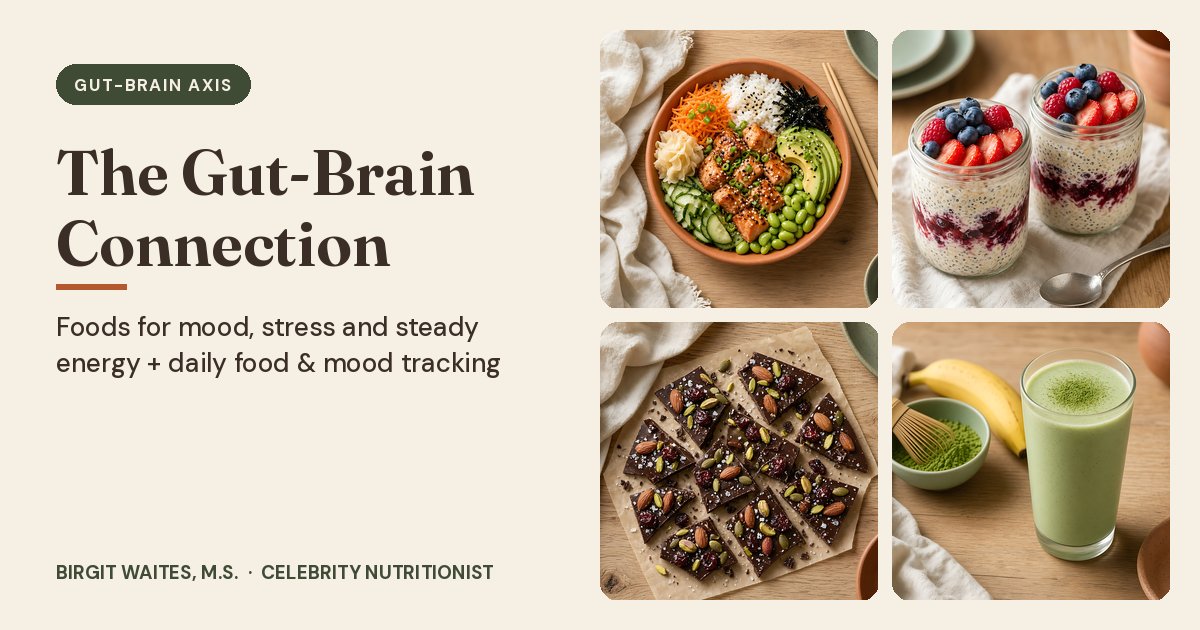
Quick answer: The gut-brain connection (or gut-brain axis) is the two-way communication highway linking your digestive tract's enteric nervous system, your vagus nerve, your immune system and your gut microbiome with your brain. While food is never a substitute for mental health care, human clinical trials show that a psychobiotic, Mediterranean-style plate—rich in omega-3 fatty acids (wild salmon, sardines, walnuts, flax), live fermented foods (yogurt, kefir, sauerkraut, kimchi), prebiotic fibers (oats, beans, lentils, onions, berries), magnesium-rich cacao and pumpkin seeds, tryptophan-and-B6 food pairings and green tea polyphenols—supports steadier mood, calmer stress recovery and all-day energy.
Have you ever felt “butterflies” in your stomach before a big conversation, or noticed that a week of rushed, ultra-processed meals leaves your mind feeling foggy, irritable and exhausted by 3 p.m.? That isn't “all in your head.” It is your gut-brain axis talking.
After 20+ years in holistic nutrition—and writing my book Healing From Within: The Science-Backed Guide to Your Gut-Brain Connection—this is still the topic that lights me up most: every meal you eat sends chemical, neural and immune messages from your kitchen plate straight up to your brain. Here is how that highway works in plain, everyday language, and the exact foods that help your mood, stress response and energy feel steadier.
At a Glance: What the Science Shows
- Your gut has its own nervous system: The enteric nervous system (ENS) lining your digestive tract contains more than 100 million nerve cells—more neurons than your spinal cord—and talks continuously with your brain via the vagus nerve, where roughly 80% to 90% of the nerve fibers carry signals up from the gut to the brain (Mayer, Nature Reviews Neuroscience, 2011).
- About 90% of your body's serotonin is made in the gut: Enterochromaffin cells in the intestinal lining produce roughly 90% to 95% of the body's peripheral serotonin, heavily influenced by gut bacteria and short-chain fatty acids (Yano et al., Cell, 2015).
- A whole-food Mediterranean plate improved mood in randomized trials: In the landmark SMILES randomized controlled trial (BMC Medicine, Jacka et al., 2017, n = 67), adults who shifted from a processed diet to a fiber- and omega-3-rich Mediterranean diet alongside their usual care had significantly greater mood improvements over 12 weeks than a social-support control group.
- A “psychobiotic” fiber-and-fermented-food diet lowered perceived stress in 4 weeks: In APC Microbiome Ireland's randomized controlled trial (Molecular Psychiatry, Berding et al., 2023, n = 45), eating 6–8 daily servings of prebiotic-rich fruits, vegetables, grains and legumes plus 2–3 servings of fermented foods lowered perceived stress by 32% and improved sleep quality in just 4 weeks.
1. The Gut-Brain Axis Explained: How Your Stomach and Brain Talk All Day
When people search for gut brain axis explained, they often run into intimidating textbook diagrams. In reality, your gut and brain talk to each other through four everyday channels:
- The Vagus Nerve & Enteric Nervous System (The Express Phone Line): Your enteric nervous system—often called your “second brain”—lines your digestive tract from esophagus to colon. It connects directly to your brain stem through the vagus nerve. Because up to 90% of vagal fibers are afferent (traveling from gut to brain), a calm, well-nourished gut continually sends “all clear” safety signals upstairs (Breit et al., Frontiers in Psychiatry, 2018).
- Gut-Derived Neurotransmitters & Tryptophan Pathways (The Chemical Messengers): While serotonin made in the gut does not cross the blood-brain barrier directly, your gut microbes regulate how dietary tryptophan (an essential amino acid from protein foods) is routed—either toward serotonin and melatonin synthesis or down inflammatory kynurenine pathways (O'Mahony et al., Behavioural Brain Research, 2015). Certain Lactobacillus and Bifidobacterium strains also produce GABA, your nervous system's primary calming messenger.
- Short-Chain Fatty Acids Like Butyrate (The Microbial Fuel): When beneficial colon bacteria ferment prebiotic fibers from oats, beans, onions and berries, they release butyrate, propionate and acetate. These short-chain fatty acids strengthen the intestinal barrier, support the blood-brain barrier, and calm neuro-inflammatory signaling (Silva et al., Frontiers in Endocrinology, 2020).
- The HPA Stress Axis & Cytokines (The Alarm System): An irritated, low-fiber gut allows inflammatory molecules to dial up your hypothalamic-pituitary-adrenal (HPA) stress response—something I cover deeply in Foods That Lower Cortisol Levels Naturally.
Gut Brain Axis Explained: Your Gut Has Its Own Nervous System
Watch my quick YouTube Short explaining how your enteric nervous system, your vagus nerve, and the 90% of your body's serotonin made in the gut work together—and why feeding your gut microbes real food matters every single day.
2. Top 6 Gut-Brain Connection Foods for Steady Mood, Calm & Energy
In nutrition research, whole foods that nourish beneficial gut microbes to support mental clarity and emotional resilience are often called psychobiotic foods (Berding et al., Molecular Psychiatry, 2023). Here are the six food groups with the strongest human evidence:
| Gut-Brain Food Group | Best Everyday Grocery Picks | How It Supports Mood, Calm & Energy | Daily / Weekly Target |
|---|---|---|---|
| 1. Omega-3-Rich Fish & Seeds | Wild salmon, sardines, mackerel, trout, walnuts, chia seeds, ground flaxseed | Builds flexible neuronal membranes; lowers stress-induced cortisol by 19% and IL-6 by 33% in human trials (Madison et al., 2021) | Oily fish 2–3x/week + 1–2 tbsp walnuts/chia/flax daily |
| 2. Live Fermented Foods | Plain Greek yogurt, kefir, raw unpasteurized sauerkraut, kimchi, miso, tempeh | Delivers live lactobacilli & bifidobacteria; lowers 19 inflammatory proteins (Wastyk et al., Cell, 2021) | 1–2 servings every day (keep cold for live cultures) |
| 3. Prebiotic Fiber Plants | Rolled oats, barley, lentils, chickpeas, black beans, onions, garlic, leeks, asparagus, apples | Fermented into butyrate to nourish the gut lining and vagus-nerve signaling (see my Gut Health Foods List) | 30–40 g total fiber/day (added gradually) |
| 4. Tryptophan + Vitamin B6 Pairings | Eggs, poultry, wild salmon, tofu, edamame, pumpkin seeds, oats, chickpeas, bananas, spinach | Supplies tryptophan plus the vitamin B6, folate and iron cofactors needed to convert tryptophan into serotonin and evening melatonin | 25–30 g protein at each meal paired with complex carbs |
| 5. Magnesium-Rich Cacao, Seeds & Greens | Roasted pumpkin seeds (156 mg/oz), chia seeds, 85% dark chocolate/cacao, spinach, black beans, almonds | Supports GABA receptors, healthy cortisol clearance and steady cellular energy (ATP) | 320–420 mg magnesium/day from whole foods |
| 6. Polyphenol Berries, Olive Oil & Green Tea | Wild blueberries, blackberries, pomegranate, extra-virgin olive oil, green tea, matcha, herbs | Feeds Akkermansia; supplies L-theanine for calm focus without jitters (Hidese et al., Nutrients, 2019) | 1 cup berries + 1–2 tbsp olive oil + morning green tea |
3. How Blood-Sugar Rollercoasters & Ultra-Processed Foods Affect Mood and Energy
When people ask me for foods for mood and energy, they often think they need a stronger afternoon stimulant. Usually, they need to get off the blood-sugar rollercoaster.
When breakfast is black coffee and a refined pastry (or skipped altogether), blood glucose spikes rapidly and then crashes two hours later. To rescue your brain from low glucose, your adrenal glands release adrenaline, glucagon and cortisol. Physically, that counter-regulatory dip feels like: - Sudden irritability or “hangry” tension - Shaky hands, a racing heart or anxious restlessness - A heavy 3 p.m. brain fog and energy crash - Intense cravings for sugar, salt or another cup of coffee
At the same time, large epidemiological cohorts and feeding studies link diets high in ultra-processed foods (packaged snacks, sweetened beverages, refined flours and synthetic emulsifiers) to higher rates of low mood and perceived stress (Lane et al., BMJ, 2024).
The “Steady Plate” Formula for All-Day Energy
In my free 5 Steady-Energy Habits guide, I share the simple plate rule that keeps blood sugar—and your gut-brain axis—on an even keel from morning to night: 1. Anchor breakfast with 25 to 30 grams of protein within 90 minutes of waking (eggs with greens, Greek yogurt with chia and walnuts, or a tofu scramble). 2. Never eat “naked” carbohydrates: Always dress fruit, oats, potatoes or rice with protein, fiber and healthy fat (for example, an apple with almond butter, or oats with Greek yogurt, chia seeds and walnuts). 3. Eat vegetables and protein first at lunch and dinner before starches—a simple meal-order habit that softens post-meal glucose spikes and supports natural fullness (see Natural GLP-1 Foods).
4. How to Use a 2-Minute Daily Food & Mood Journal
Every gut microbiome is as unique as a fingerprint. A food that gives one person steady energy can leave another person feeling bloated or sluggish the next morning.
That is why a food and mood journal is one of the most powerful tools in holistic nutrition—not to count calories or judge yourself, but to connect the dots between your plate, your digestion, your sleep and your mood. Here is the 2-minute evening check-in I built into my free 90-Day Food & Mood Journal and free 12-Week Food & Mood Journal:
| What to Jot Down (Takes 2 Minutes at Night) | What You'll Start to Notice After 10–14 Days |
|---|---|
| 1. Meals & Timing: What you ate at breakfast, lunch, dinner & snacks (plus coffee and alcohol timing) | Whether protein-first breakfasts prevent your 3 p.m. energy crash or evening sugar cravings |
| 2. Plant & Fermented Count: Tick off each unique plant food and fermented serving | How quickly you reach 30+ plants a week when you count herbs, seeds, berries and beans |
| 3. Gut Comfort (1–5 scale): Bloating, fullness, regularity or calm digestion | Which specific meals (or rushed, stressed eating) precede bloating 4 to 24 hours later |
| 4. Mood, Stress & Afternoon Energy (1–5 scale): Calm vs. wired, focused vs. foggy | How hydration, green tea swaps and fermented foods shift your afternoon clarity |
| 5. Sleep Quality: Time to fall asleep & whether you woke up at 2–3 a.m. | How late caffeine, evening alcohol or heavy late dinners affect your next-day mood |
5. A 1-Day “Gut-Brain & Steady Energy” Sample Menu
Here is how to put all six psychobiotic food groups onto your plate in one delicious, practical day:
| Time | Meal or Ritual | Gut-Brain Nutrients at Work |
|---|---|---|
| Morning | 5 minutes of outdoor light + warm lemon-ginger water + Blueberry Walnut Kefir Oats (½ cup rolled oats, ½ cup plain kefir, ½ cup Greek yogurt, 1 tbsp chia seeds, 2 tbsp walnuts, ¾ cup berries, cinnamon) | ~28 g protein, live probiotics, beta-glucan prebiotic fiber, ALA omega-3s & anthocyanins |
| Mid-Morning | 1 cup green tea or matcha (with or after breakfast; cut off caffeine 6–8 hours before bed) | Polyphenols (EGCG) + calming L-theanine |
| Lunch | Mediterranean Chickpea, Spinach & Wild Salmon Salad: Mixed dark greens, ¾ cup chickpeas, flaked wild salmon (or marinated tempeh), avocado, cucumber, pumpkin seeds, extra-virgin olive oil + lemon, and 1 forkful raw sauerkraut | Long-chain EPA/DHA omega-3s, magnesium, tryptophan + B6, GOS prebiotic fiber & live lactobacilli |
| 3 p.m. Reset | 3 minutes of slow long-exhale breathing + 1 crisp apple with 2 tbsp almond butter and 2 squares of 85% dark chocolate | Stimulates the vagus nerve; pectin fiber + cocoa flavanols + magnesium |
| Dinner | Golden Turmeric Lentil & Vegetable Stew with garlic, onions, carrots, kale and a scoop of quinoa, drizzled with olive oil | Prebiotic inulin & GOS for overnight butyrate production + gentle evening carbohydrates |
| Evening | 2-minute Food & Mood Journal check-in + warm chamomile or peppermint tea | Mindful pattern tracking + alcohol-free, restorative sleep |
Frequently asked questions
What is the gut-brain connection in simple terms?
The gut-brain connection (or gut-brain axis) is the constant two-way communication system between your digestive tract and your brain. They talk through four main pathways: the vagus nerve and the enteric nervous system ("second brain") lining your gut, chemical messengers like serotonin and GABA, short-chain fatty acids (like butyrate) made when gut bacteria ferment fiber, and immune signaling.
What are the best foods for the gut-brain connection and mood?
In clinical studies like the SMILES trial and APC Microbiome Ireland's psychobiotic diet study, the best foods for the gut-brain axis are omega-3-rich fish (wild salmon, sardines, mackerel), live fermented foods (plain yogurt, kefir, raw sauerkraut, kimchi, miso), prebiotic fiber foods (oats, beans, lentils, onions, garlic, asparagus, apples, berries), nuts and seeds (walnuts, pumpkin seeds, chia, flax), extra-virgin olive oil, leafy greens and polyphenol-rich green tea and dark cacao.
Is 90% of serotonin really made in the gut?
Yes—research shows that roughly 90% to 95% of your body's total serotonin is produced by enterochromaffin cells in your gastrointestinal tract, with help from your gut microbiome. While gut serotonin does not cross the blood-brain barrier directly into the brain, it regulates digestion, signals the brain through the vagus nerve, and influences how dietary tryptophan is used throughout the body.
How does the vagus nerve connect the gut and brain?
The vagus nerve is the longest cranial nerve in the body, running from your brainstem all the way to your digestive organs. Remarkably, about 80% to 90% of its nerve fibers carry messages upward from the gut to the brain. Nourishing your gut microbiome with fermentable fiber and fermented foods—alongside slow, deep-exhale breathing—helps support healthy vagal tone and a calmer stress response.
Can changing my diet replace medical care for anxiety or depression?
No. Nourishing your gut-brain axis with whole foods, steady blood sugar, sleep and movement is a powerful foundation for everyday wellbeing, energy and stress resilience, but it is wellness education—not a replacement for professional mental health care, therapy or prescribed medication. Always work with your physician or mental health provider.
Your next step
Start with one gut-brain habit for the next seven days: eat a protein-and-fiber breakfast before your morning coffee, add one spoonful of a live fermented food to lunch, or spend two minutes each evening jotting down what you ate and how your energy and mood felt.
- 📓 Download the free 90-Day Food & Mood Journal (or Your 12-Week Food & Mood Journal) on my Free Guides page—100% free ($0), instant printable PDF download.
- 🎁 Grab the free Gut-Brain Starter Kit (also on free.html) for 5 gut-loving foods, a 3-day menu with 9 easy recipes, a shopping list and a daily tracker.
- 📘 Read the full book: Healing From Within: The Science-Backed Guide to Your Gut-Brain Connection (digital edition on Payhip or Amazon) includes 99 real-food recipes and my complete gut-brain framework.
- 🌿 Ready for a step-by-step 3-week reset? Explore The 21-Day Gut Reset (get the workbook here)—68-page printable workbook, 7-day meal plan and 32 recipes.
- 📖 Keep reading on the blog: Check out my Gut Health Foods List: What to Eat for Gut Health (and Bloating), Foods That Lower Cortisol Levels Naturally, and Foods That Increase Testosterone Naturally.

Birgit Waites, M.S.
Birgit Waites, M.S. is a Celebrity Nutritionist with an M.S. in Natural Medicine and a Board Certified Holistic Health Practitioner (AADP), with 20+ years of experience in holistic nutrition. She's the author of Healing From Within and Nourished Through the Change, and these days she's traveling the world, cooking and writing as she goes.
Disclaimer
Wellness education, not medical advice. Content in this article is for general educational purposes only and is not intended to diagnose, treat, cure or prevent any disease. Food and lifestyle habits support general wellbeing and do not replace professional medical or mental health care. Please talk with your healthcare provider before changing your diet, exercise or supplements.