
Gut Health Foods List: What to Eat for Gut Health (and Bloating)
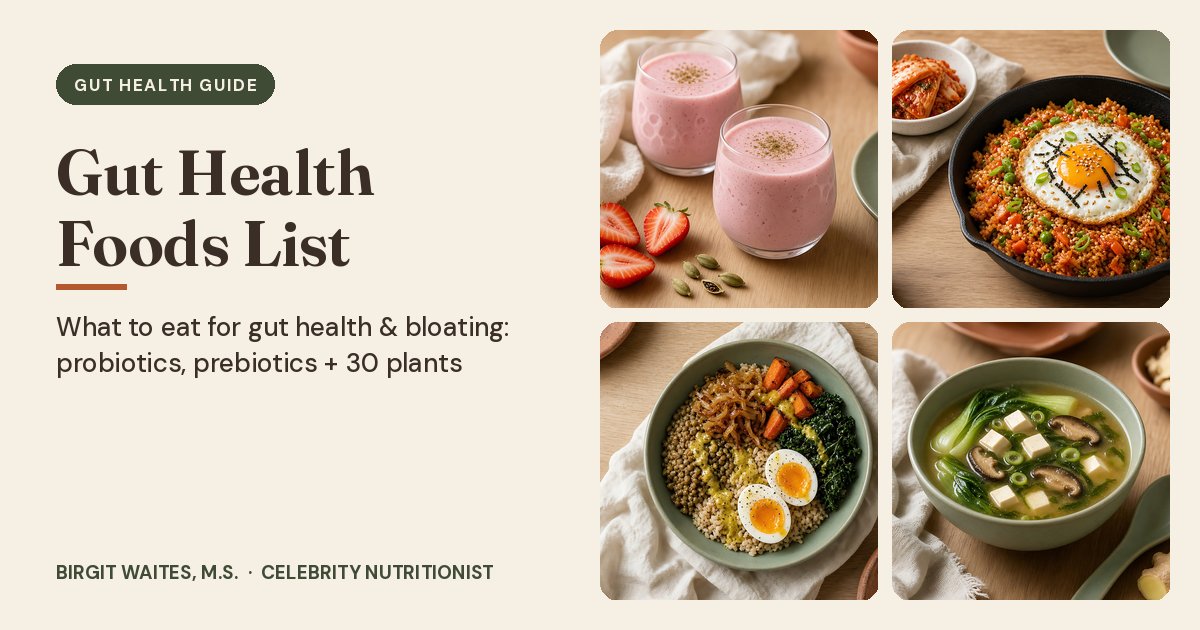
Quick answer: The most effective gut health foods list combines four daily building blocks: live probiotic and fermented foods (plain yogurt, kefir, raw sauerkraut, kimchi, miso, tempeh), prebiotic fiber foods (garlic, onions, leeks, asparagus, oats, slightly green bananas, cooled potatoes or rice, beans and lentils), polyphenol-rich plants (wild blueberries, pomegranate, extra-virgin olive oil, green tea, dark cacao) and gentle bloating-friendly foods (ginger, peppermint, fennel, kiwi, cucumber and lightly cooked greens). Pair these with the 30-plants-a-week habit and crowd out ultra-processed emulsifiers, excess added sugar and heavy alcohol.
When someone asks me for a simple gut health foods list, they usually aren't looking for a biology lecture. They want to know what to put in their grocery cart on Sunday so their stomach feels calmer by Wednesday—less afternoon bloating, steadier energy, and digestion they don't have to think about all day.
After 20+ years in holistic nutrition, here is the reassuring truth: your gut microbiome doesn't need expensive powders, harsh cleanses or a list of 50 forbidden foods. In fact, cutting out too many whole foods often shrinks the very microbial diversity your digestion relies on. What works—both in clinical research and in real kitchens—is adding the right fibers, fermented foods and colorful plants in a gentle, steady rhythm.
At a Glance: What the Science Shows
- Fermented foods build microbiome diversity: In Stanford University's 10-week randomized clinical trial (Cell, Wastyk et al., 2021), adults who ate 4 to 6 daily servings of fermented foods (yogurt, kefir, sauerkraut, kimchi, fermented cottage cheese, vegetable brine drinks) significantly increased their gut microbiome diversity and lowered 19 inflammatory proteins, including IL-6.
- 30+ plants a week beats a narrow diet: In the American Gut Project (mSystems, McDonald et al., 2018, n > 10,000), people who ate 30 or more different plant foods a week had far more diverse gut bacteria and higher levels of beneficial short-chain fatty acids than those who ate 10 or fewer plants a week—regardless of whether they were vegetarian, vegan or omnivores.
- Prebiotic fibers feed butyrate-producing microbes: Fermentable fibers (inulin, beta-glucan, galacto-oligosaccharides and resistant starch) are fermented by colon bacteria into butyrate, propionate and acetate, which nourish the cells lining your intestinal wall and support natural fullness signals (Koh et al., Cell, 2016).
- Green kiwifruit has randomized trial support for regularity and bloating: In a multi-center randomized controlled trial published in the American Journal of Gastroenterology (Gearry et al., 2023), eating 2 green kiwifruits a day improved regularity and abdominal comfort more effectively and with fewer side effects than psyllium husk.
1. Probiotic & Fermented Foods List: Live Microbes for Your Plate
Probiotic foods contain live, friendly microorganisms that interact with your gut lining and immune system as they pass through your digestive tract. When Stanford researchers compared a high-fiber diet against a high-fermented-food diet over 10 weeks (Wastyk et al., Cell, 2021), the fermented-food group showed the fastest rise in overall microbial diversity.
Use this fermented foods list for gut health when you shop—and always look for the words “live and active cultures” or “unpasteurized” in the refrigerated case (shelf-stable jars that have been heat-canned after fermentation no longer contain live microbes):
| Fermented Food | Easy Serving Size | Key Strains & Nutrients | How to Eat It (Without Cooking Away the Cultures) |
|---|---|---|---|
| Plain Greek yogurt or skyr | ¾ to 1 cup | Lactobacillus bulgaricus, Streptococcus thermophilus, plus 15–20 g protein & calcium | Breakfast bowl with berries, chia seeds and walnuts |
| Plain kefir (dairy or water kefir) | ½ to 1 cup | Up to 10–12 live bacterial and beneficial yeast strains | Blend into a morning smoothie or pour over overnight oats |
| Raw, unpasteurized sauerkraut | 1 to 2 forkfuls (2 tbsp) | Leuconostoc, Lactobacillus plantarum, vitamin C and organic acids | Spoon cold right onto salads, grain bowls, eggs or avocado toast |
| Refrigerated kimchi | 1 to 2 forkfuls (2 tbsp) | Lactic acid bacteria plus garlic, ginger and cruciferous cabbage polyphenols | Add at the table to rice bowls, tofu scrambles or salmon plates |
| Miso paste (refrigerated) | 1 tbsp | Fermented soybean peptides, Aspergillus oryzae metabolites, minerals | Whisk into warm (not boiling) broth after turning off the stove |
| Tempeh | 3 to 4 oz | Whole fermented soybeans: ~18–20 g protein and ~6–7 g prebiotic fiber | Pan-sear with ginger, garlic and tamari for lunch or dinner |
The One-Spoonful Rule: If fermented foods are new to your kitchen, start with 1 tablespoon of sauerkraut or ¼ cup of kefir a day for the first week, then build up. Starting small gives your digestion time to adjust comfortably.
2. Prebiotic Fiber Foods List: Fuel for Your Beneficial Bacteria
If probiotics are the friendly seeds in your garden, prebiotic fibers are the fertilizer. Human digestive enzymes cannot break down prebiotic fibers in the small intestine, so they travel intact to your large intestine, where beneficial microbes (Bifidobacteria, Faecalibacterium prausnitzii and Akkermansia) ferment them into short-chain fatty acids (SCFAs) like butyrate (Slavin, Nutrients, 2013).
Here are the 10 best prebiotic foods for gut health, grouped by the type of fiber they bring to your plate:
Inulin & Fructo-Oligosaccharides (FOS)
- Garlic, onions, shallots and leeks: Sauté gently in extra-virgin olive oil as the flavor base for soups, lentils and greens.
- Asparagus and Jerusalem artichokes (sunchokes): Roast with olive oil and lemon, or slice thinly into warm grain salads.
Beta-Glucan & Pectin (Gentle Soluble Fibers)
- Rolled oats, steel-cut oats and barley: Rich in beta-glucan, which forms a soothing gel in the digestive tract and supports steady blood sugar and fullness (see my guide to Natural GLP-1 Foods).
- Apples, pears (with the skin on) and citrus: Packed with pectin, a gentle soluble fiber that feeds butyrate-producing bacteria.
- Chia seeds and ground flaxseed: Two tablespoons deliver 6 to 8 grams of soluble and insoluble mucilage fiber plus plant omega-3s.
Resistant Starch (The Cook-and-Cool Kitchen Trick)
- Slightly green (just-ripe) bananas: Higher in resistant starch before the peel spots brown.
- Cooked-and-cooled potatoes, sweet potatoes, brown rice and oats: When you cook starchy foods and chill them in the fridge overnight (like potato salad, sushi rice or overnight oats), part of the starch retrogrades into type-3 resistant starch, which bypasses upper-gut digestion and feeds your colon microbes—even if you gently reheat the meal the next day (Sonia et al., Asia Pacific Journal of Clinical Nutrition, 2015).
Galacto-Oligosaccharides (GOS)
- Lentils, chickpeas, black beans and edamame: Half a cup a day supplies 6 to 8 grams of prebiotic fiber plus plant protein. Kitchen tip for less gas: rinse canned beans thoroughly under cold water for 30 seconds (or soak dried beans overnight and discard the soaking water) to wash away excess surface oligosaccharides.
3. Polyphenol-Rich Plants: The Colorful “Microbiome Shapers”
Only about 5% to 10% of the polyphenols (plant antioxidants) you eat are absorbed in your small intestine. The remaining 90% to 95% travel straight to your colon, where gut bacteria transform them into anti-inflammatory metabolites while the polyphenols selectively encourage beneficial microbes like Akkermansia muciniphila and Bifidobacteria (Cardona et al., Journal of Nutritional Biochemistry, 2013).
- Wild blueberries, blackberries, raspberries and strawberries: Fresh or frozen, 1 cup a day brings anthocyanins and soluble fiber.
- Pomegranate arils: Rich in ellagitannins that gut bacteria convert into urolithins.
- Extra-virgin olive oil: 1 to 2 tablespoons daily over vegetables and salads delivers hydroxytyrosol and oleic acid.
- Green tea and matcha: Catechins (EGCG) support a calmer gut-brain rhythm (and help support healthy cortisol rhythms).
- Dark cacao (80%+ dark chocolate or unsweetened cocoa powder): In a randomized controlled crossover trial (American Journal of Clinical Nutrition, Tzounis et al., 2011), high-flavanol cocoa significantly increased Bifidobacteria and Lactobacilli in healthy adults.
4. What to Eat for Gut Health and Bloating: 6 Soothing Foods
Searches for “what to eat for gut health and bloating” and “gut health foods for women” are among the most common questions I see every week—especially for women navigating midlife hormonal shifts (which I cover in detail in Foods to Eat During Menopause).
When your stomach feels tight, distended or gassy, piling a mountain of raw broccoli and dry bran onto your plate will only make you feel worse. Instead, reach for cooked, hydrating, motility-supporting foods:
- Fresh ginger root: Ginger contains gingerols and shogaols that stimulate gastric emptying—helping food move smoothly out of the stomach instead of sitting and fermenting. In a randomized crossover study (Wu et al., European Journal of Gastroenterology & Hepatology, 2008), ginger significantly accelerated stomach emptying in healthy adults. Grate ½ teaspoon into warm lemon water or stir-fries.
- 2 green kiwifruits a day: Green kiwifruit contains a natural enzyme called actinidin plus water-holding soluble fiber. In a 4-week randomized controlled trial (Gearry et al., American Journal of Gastroenterology, 2023), two green kiwifruits daily increased complete spontaneous bowel movements and reduced abdominal discomfort.
- Peppermint and fennel seed tea: Peppermint oil and leaf tea help relax smooth muscle spasms in the digestive tract (Khanna et al., Journal of Clinical Gastroenterology, 2014). Enjoy a warm cup 20 minutes after lunch or dinner.
- Cooked Zucchini, Carrots, Spinach and Kabocha or Butternut Squash: Cooking breaks down tough insoluble cellulose plant walls so your gut gets the soluble fiber and minerals without excess fermentation gas.
- Cucumber, Celery and Citrus-Infused Water: Potassium-rich, high-water produce helps flush excess sodium and water retention while keeping fiber moving.
- Warm Miso-Ginger Broth or Bone Broth: Warm liquids relax the digestive tract and hydrate soluble fibers.
When to see a doctor promptly: Occasional bloating after a big or unfamiliar meal is normal, but persistent bloating that lasts more than a few weeks—or bloating accompanied by unexplained weight loss, blood in your stool, fever, vomiting, anemia or severe abdominal pain—always deserves a proper medical evaluation with your healthcare provider.
5. Gut Health Foods to Avoid (or Crowd Out Most Days)
You don't need perfection to have a happy gut, and stressing over every bite activates the very stress hormones that slow digestion down. Rather than strict restriction, focus on crowding out the five everyday inputs that research links to a thinner mucus layer and lower microbial diversity:
| Gut-Disrupting Input | Why It Bothers Your Microbiome & Bloating | Easy Everyday Kitchen Swap |
|---|---|---|
| 1. Ultra-processed emulsifiers (polysorbate-80, carboxymethylcellulose, carrageenan in packaged creamers, ice creams & dressings) | In a human randomized controlled feeding study (Gastroenterology, Chassaing et al., 2022), synthetic dietary emulsifiers reduced microbiome diversity and pro-inflammatory markers | Whisk extra-virgin olive oil + lemon juice + Dijon mustard, or use real milk/unsweetened soy or almond milk with 2 ingredients |
| 2. Excess added sugar & sugary drinks (soda, sweet coffee syrups, pastries) | Feeds fast-growing opportunistic microbes and yeast while starving fiber-fermenting bacteria; triggers blood-sugar spikes | Whole berries, baked cinnamon apples, medjool dates with walnuts, or 85% dark chocolate |
| 3. Sugar alcohols & heavy artificial sweeteners (sorbitol, mannitol, xylitol, maltitol in “keto” or “sugar-free” bars and gums) | Poorly absorbed in the small intestine; pull water into the gut and ferment rapidly, causing immediate gas and bloating (Ruiz-Ojeda et al., Advances in Nutrition, 2019) | Flavor water with fresh citrus, mint, ginger or a splash of 100% pomegranate or tart cherry juice |
| 4. Heavy or nightly alcohol | Irritates the intestinal lining, increases gut permeability and disrupts second-half sleep (Bishehsari et al., Alcohol Research, 2017) | Sparkling water with lime, bitters-free hibiscus iced tea, or warm evening chamomile tea |
| 5. Deep-fried & low-fiber ultra-processed snacks | High in oxidized fats and salt with almost zero fermentable fiber to feed colon bacteria; slows stomach emptying | Air-popped popcorn with olive oil, roasted chickpeas, edamame, or a handful of walnuts and pumpkin seeds |
6. The “30 Plants a Week” Strategy & 1-Day Gut-Supportive Menu
In the American Gut Project (McDonald et al., mSystems, 2018), counting unique plant species across seven days was the single strongest dietary predictor of a diverse, resilient gut microbiome. Best of all, every plant counts: vegetables, fruits, beans, lentils, whole grains, nuts, seeds, fresh herbs, spices, coffee, tea and dark chocolate.
Here is how a single delicious day easily checks off 18+ unique plants, 35+ grams of gentle fiber, and 2 servings of live fermented foods—without bloating:
| Meal | What's on the Plate | Gut-Health Building Blocks Included |
|---|---|---|
| Morning Sip | Warm water with ½ fresh lemon and grated ginger | Hydration + gingerol motility support (2 plants) |
| Breakfast | Blueberry Kefir Overnight Oats: ½ cup rolled oats, ½ cup plain kefir, ½ cup ** Greek yogurt, 1 tbsp chia seeds, 1 tbsp ground flaxseed, ¾ cup wild blueberries, walnuts & cinnamon** | Live kefir & yogurt probiotics + beta-glucan + ALA omega-3s + berry anthocyanins (6 new plants) |
| Lunch | Warm Lentil, Roasted Carrot & Spinach Bowl: ¾ cup well-rinsed green lentils, ½ cup cooked-and-cooled quinoa, roasted carrots & zucchini, wilted spinach, extra-virgin olive oil, garlic, parsley + 1 forkful raw sauerkraut | GOS & resistant starch + live lactobacilli + olive oil polyphenols (7 new plants) |
| Afternoon Snack | 2 green kiwifruits + 1 cup green tea (before 2 p.m.) + a small square of 85% dark chocolate | Actinidin enzyme for regularity + catechins + cocoa flavanols (3 new plants) |
| Dinner | Ginger-Miso Salmon (or Crispy Tempeh) with Bok Choy & Brown Rice: Baked wild salmon, sautéed baby bok choy with ginger and sesame seeds, ½ cup brown rice, and a mug of warm miso broth stirred in off the heat | Omega-3 EPA/DHA + fermented miso & soy + gentle cooked greens (2 new plants = 20 unique plants in 1 day!) |
| Evening | Warm peppermint or fennel herbal tea + a 10-minute gentle walk after dinner | Smooth-muscle digestive relaxation + post-meal motility |
Want my printable 3-day menu, shopping list and 30-plants tracker on your fridge? Download my free Gut-Brain Starter Kit.
Frequently asked questions
What are the best foods to eat for gut health every day?
Aim for one food from each of the four gut-health groups every day: (1) a live fermented food like plain Greek yogurt, kefir, raw sauerkraut, kimchi or miso; (2) prebiotic fibers such as oats, beans, lentils, garlic, onions, chia or flaxseed; (3) colorful polyphenol-rich plants like berries, extra-virgin olive oil, leafy greens and green tea; and (4) plenty of water alongside 30 different plant foods across the week.
What should I eat for gut health and bloating?
When you feel bloated, choose cooked vegetables (zucchini, carrots, spinach, squash) over big raw salads, and include motility-supporting foods like fresh ginger tea, two green kiwifruits a day, peppermint or fennel tea, oats and fermented foods like plain yogurt or kefir. Add high-fiber foods like beans and chia seeds gradually over two to three weeks with extra water, and take a 10-minute walk after meals.
What is the difference between prebiotic and probiotic foods?
Probiotic foods contain live beneficial microbes—examples include plain yogurt with live and active cultures, kefir, unpasteurized sauerkraut, kimchi, miso and tempeh. Prebiotic foods contain fermentable fibers that feed the friendly bacteria already living in your colon—examples include garlic, onions, leeks, asparagus, oats, barley, beans, lentils, slightly green bananas, chia seeds and cooked-and-cooled potatoes or rice. Your gut thrives when you pair both on the same plate.
Which foods are worst for gut health?
The foods most likely to disrupt your gut microbiome and trigger bloating when eaten daily are ultra-processed foods made with synthetic emulsifiers (like polysorbate-80 and carboxymethylcellulose), sugary drinks and pastries high in added sugar, sugar alcohols (sorbitol, maltitol, xylitol) in "sugar-free" snacks, heavy alcohol and deep-fried foods low in natural fiber.
How long does it take to improve gut health with food?
Your gut bacteria begin shifting their activity within 24 to 72 hours of eating more fiber and plant variety, and bloating often eases within 1 to 2 weeks of swapping ultra-processed snacks for cooked whole foods, ginger, kiwifruit and daily hydration. In Stanford University's clinical trial, 10 weeks of daily fermented foods significantly increased overall microbiome diversity and lowered inflammatory markers.
Your next step
You don't need to buy 30 new ingredients today. Pick two items from this gut health foods list for your next grocery trip—a tub of plain kefir or raw sauerkraut, and a bag of wild blueberries, green kiwifruit or rolled oats. Add them to breakfast for the next seven days, and write down how your digestion and afternoon energy respond.
- 🎁 Get my free Gut-Brain Starter Kit for my 5 favorite gut-loving foods, a 3-day menu with 9 easy recipes, a printable shopping list and a daily food & mood tracker.
- 📓 Download the free 90-Day Food & Mood Journal (with built-in 30-plants-a-week trackers) on my Free Guides page.
- 📘 Read the book: Healing From Within (digital edition on Payhip) gives you the full science of the gut-brain connection plus 99 real-food recipes.
- 🌿 Want a guided 3-week plan? Join The 21-Day Gut Reset (get the workbook here) for a 68-page printable workbook, 7-day meal plan, 32 recipes and habit trackers.
- 📖 Keep reading on the blog: Explore Foods That Lower Cortisol, Natural GLP-1 Foods, Foods to Eat During Menopause and Foods for Younger-Looking Skin.

Birgit Waites, M.S.
Birgit Waites, M.S. is a Celebrity Nutritionist with an M.S. in Natural Medicine and a Board Certified Holistic Health Practitioner (AADP), with 20+ years of experience in holistic nutrition. She's the author of Healing From Within and Nourished Through the Change, and these days she's traveling the world, cooking and writing as she goes.
Disclaimer
Wellness education, not medical advice. Content in this article is for general educational purposes only and is not intended to diagnose, treat, cure or prevent any disease. Please talk with your healthcare provider before changing your diet, exercise or supplements, especially if you have a medical condition, are pregnant or nursing, or take medication.