
How to Avoid Blood Sugar Spikes After Eating: Food Order, Smart Pairings and the 1-Minute Habit
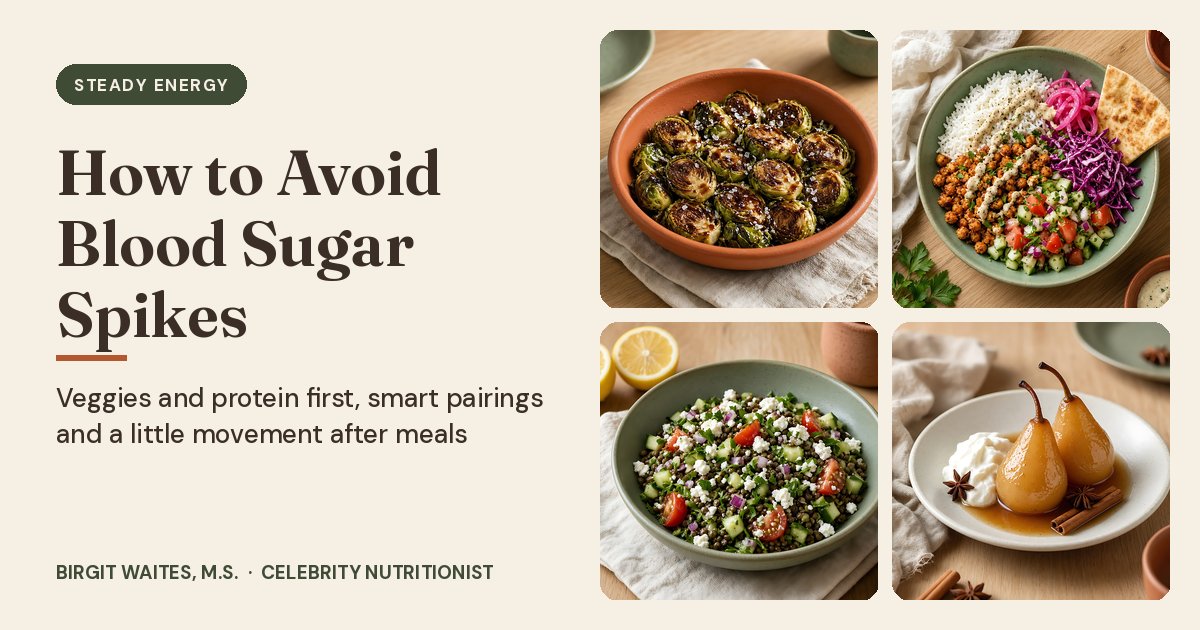
Quick answer: To avoid big blood sugar spikes after eating, change how you eat before you cut out the foods you love. Eat your vegetables and protein first and your bread, rice, potatoes or dessert last: in a small study, this simple food order cut the after-meal glucose rise by about three quarters (Shukla et al., 2015). Pair carbs with fiber, a little fat or something acidic (beans, vegetables, olive oil, lemon, vinegar), choose whole or less-processed starches (Harvard Nutrition Source), and move after you eat: light walking beats sitting (Buffey et al., 2022), and even 1 minute of easy stair-stepping lowered the rise in small trials (Morales et al.). If you have diabetes or take glucose-lowering medication, follow your care team's plan.
It's the season of feasts. Thanksgiving tables, Christmas cookies, Hanukkah latkes, office parties and New Year buffets, all in a few short weeks. And this week, a tiny study about one minute of stair climbing went around the world in the news, because it promised something we all want: a simple way to enjoy the food and feel steady afterward.
After 20+ years in holistic nutrition, here's my honest take: steady blood sugar is less about saying no and more about the order, the pairings and the movement. You don't need a glucose monitor or a "forbidden foods" list. You need a plate strategy you can use at any table in the world.
At a glance: what the research says
- Food order matters. When adults with type 2 diabetes ate vegetables and protein first and the carbs 15 minutes later, their glucose rise over 2 hours was 73% lower than when they ate the same meal carbs-first (Shukla et al., 2015).
- Fiber, fat and acid slow things down. High-fiber foods cause "a more gradual and lower rise in blood sugar", and meals with fat or acid are converted into sugar more slowly (Harvard Nutrition Source).
- Light walking beats sitting. A meta-analysis of 7 trials found short, light walking breaks lowered after-meal glucose and insulin compared with sitting, and worked better than standing breaks (Buffey et al., 2022).
- Even 1 minute of movement helped healthy young adults in small lab studies (Morales et al.; Moore et al., 2024).
What is a blood sugar spike, in plain words?
When you eat carbohydrates, your body breaks the digestible ones down into sugar (glucose), which enters your blood. As blood sugar rises, your pancreas releases insulin, which helps your cells take that sugar in for energy or storage, and your levels come back down (Harvard Nutrition Source).
A rise after meals is completely normal. What we're talking about here is making that rise gentler: a rolling hill instead of a steep mountain. Harvard notes that eating many high-glycemic foods, which cause powerful spikes, is linked with a higher risk of type 2 diabetes and heart disease over time (Harvard Nutrition Source). For everyday life, most people simply notice they feel steadier and less snacky when their meals are built well.
1. Eat your vegetables and protein first, carbs last
This is my favorite tip because it costs nothing and you don't give up a single bite.
In a small crossover study, 11 adults with type 2 diabetes ate the same meal on two days: ciabatta bread and orange juice, plus chicken breast, salad and steamed broccoli with butter. When they ate the vegetables and protein first and the carbs 15 minutes later, their blood sugar was about 29% lower at 30 minutes, 37% lower at 60 minutes and 17% lower at 2 hours, and insulin was lower too (Shukla et al., 2015).
It was a small pilot study in people with diabetes, so it isn't the final word for everyone. But the idea is simple, safe and easy to try. A registered dietitian at Aurora Health Care gave the same advice for Thanksgiving this month: "Eat your protein and vegetables first, followed by your starchy foods and dessert" (Advocate Health Care health enews, Nov 17, 2026).
How this looks around the world:
- Mediterranean: salad with olive oil and lemon, then the fish, then the bread.
- Indian: start with the dal, the vegetable sabzi and a spoon of plain yogurt, then the rice or roti.
- Japanese: miso soup, edamame and pickles first, then the rice.
- Mexican: black beans, nopales or a cabbage slaw first, then the tortillas.
- Holiday table: green beans, Brussels sprouts and turkey or a lentil roast first, then stuffing, potatoes and pie.
2. Build a "Steady Plate"
The Aurora dietitian's holiday rule is the same plate I teach all year (Advocate Health Care health enews):
| Part of the plate | What goes there | Easy examples from many cuisines |
|---|---|---|
| ½ plate | Non-starchy vegetables | Green beans, Brussels sprouts, broccoli, salad greens, carrots, cabbage, peppers, bok choy |
| ¼ plate | Protein | Turkey, fish, eggs, tofu, tempeh, lentils, chickpeas, Greek yogurt |
| ¼ plate | Your favorite starch | Stuffing, potatoes, rice, pasta, bread, tortillas, plantain |
| A little | Healthy fat and acid | Olive oil, avocado, nuts, seeds, a squeeze of lemon, a splash of vinegar |
Too many favorites to fit on a quarter plate? Take bite-size portions of several dishes instead of a full scoop of each (Advocate Health Care health enews).
3. Pair your carbs: fiber, fat and acid
According to Harvard's Nutrition Source, several things change how fast a carb food raises blood sugar (Harvard Nutrition Source):
- Fiber: high-fiber foods have less digestible carbohydrate and slow digestion, giving a more gradual and lower rise.
- Processing: refined grains (with the bran and germ removed) raise blood sugar faster than minimally processed whole grains.
- Physical form: finely ground grain digests faster than coarse or whole grain, so whole oats and brown rice beat instant versions.
- Ripeness: riper fruit tends to have a higher glycemic index.
- Fat and acid: meals with fat or acid are converted into sugar more slowly.
Smart pairings I use every day:
- Apple + a spoon of peanut or almond butter instead of apple juice.
- Rice + beans or lentils (rice and beans, dal and rice, mujaddara). The legumes bring fiber and protein.
- Bread + olive oil, hummus or eggs instead of bread on its own.
- Pasta + vegetables + a protein, like lentil bolognese or pasta with broccoli and white beans.
- Potatoes + a lemony green salad with an olive oil and vinegar dressing.
- Dessert after the meal, not on an empty stomach in the middle of the afternoon.
For more fiber ideas, see my guide to fibermaxxing, and for protein at every meal, see how much protein women over 40 need.
4. Choose foods that don't spike blood sugar as much
No food is "spike-free" for everyone, and portions matter. Harvard's lists use glycemic load, which counts both the type and the amount of carbohydrate in a serving. A glycemic load of 10 or under is low, 11 to 19 is medium, and 20 or more is high (Harvard Nutrition Source).
| Low glycemic load (10 or under) | Medium (11–19) | High (20 or more) |
|---|---|---|
| Apple, orange | Pearled barley, 1 cup (240 ml) cooked | Baked potato |
| Kidney beans, black beans, lentils | Brown rice, ¾ cup (180 ml) cooked | French fries |
| Carrots | Oatmeal, 1 cup (240 ml) cooked | Sugar-sweetened drinks, 12 oz (355 ml) |
| Peanuts, cashews | Bulgur, ¾ cup (180 ml) cooked | White basmati rice, 1 cup (240 ml) cooked |
| Bran cereals, skim milk, wheat tortilla | Whole-grain bread, 1 slice | White-flour pasta, 1¼ cups (300 ml) cooked |
Source: Harvard T.H. Chan School of Public Health, The Nutrition Source. Metric amounts are kitchen-cup equivalents.
My take: you don't have to avoid the right-hand column. Just give it company (vegetables, protein, a little fat) and keep the portion moderate.
5. Watch the drinks
Holiday drinks are sneaky. Sweet tea, cider, soda, punch, eggnog, wine and cocktails can all push blood sugar up, so the Aurora dietitian suggests water or unsweetened drinks first, and moderation with alcohol and sugary mixers (Advocate Health Care health enews).
Easy swaps from my travels: sparkling water with lime and mint, unsweetened hibiscus tea (served chilled in many countries), ginger tea, or a small glass of wine with the meal instead of before it.
6. Move after you eat (even 1 minute counts)
Here's the part that made the news this week.
- The 1-minute study: 30 adults without diabetes (average age 29) drank a 75 g glucose drink in the evening on two separate days. On one day they sat; on the other they stepped up and down stairs at their own easy pace for just 1 minute. With the stair-stepping, their blood sugar rise at 60 minutes was 2.5 mmol/L (about 45 mg/dL) instead of 4.3 mmol/L (about 77 mg/dL), and they rated the effort as light (Morales et al., Exp Physiol). News reports described it as roughly a 40% smaller rise, while stressing that it was small, short and used sugar water, not a real meal (cleveland.com, Nov 20, 2026).
- With a real meal: in an earlier trial by the same lab, 31 young adults ate a 650-calorie mixed meal and then did 0, 1, 3 or 10 minutes of comfortable stair climbing and descending. All three movement options lowered the glucose rise compared with sitting (Moore et al., 2024).
- Walking breaks: across 7 trials, light-intensity walking breaks lowered after-meal glucose and insulin compared with sitting, and did better than standing breaks (Buffey et al., 2022).
What I do: a 10-minute walk after lunch and dinner whenever I can, and on busy days, a minute of stairs, a few laps of the hallway or a dance in the kitchen while the kettle boils. After a big holiday meal, a 20 to 30 minute family walk is lovely too (Advocate Health Care health enews). Movement is a helper, not a replacement for regular exercise or for any care plan you have.
7. Don't "save up" for the feast
It's tempting to skip breakfast and lunch to "save room". Instead, have a normal, balanced breakfast with protein and fiber (eggs and vegetables, Greek yogurt with berries and seeds, or overnight oats with chia), and a light lunch. Arriving at the table ravenous is how most of us end up eating bread and crackers first, which is the opposite of tip 1.
A steady holiday day (sample)
| When | What to eat or do |
|---|---|
| Breakfast | Greek yogurt or soy yogurt with berries, 1 tbsp (about 10 g) chia seeds and a few walnuts |
| Lunch | Big lentil and vegetable soup with a slice of whole-grain bread |
| Before the feast | A glass of water; a few raw vegetables with hummus if you're very hungry |
| The feast | Vegetables and protein first, then bite-size portions of your favorite starches |
| After the feast | 10 to 30 minutes of walking, or at least 1 minute of easy stairs |
| Dessert | One favorite, a smaller slice, eaten slowly after the meal |
Who should talk to a healthcare provider first?
These tips are food-and-habit basics for everyday wellness. Please check with your doctor, dietitian or diabetes educator before changing how you eat or exercise if:
- You have diabetes or prediabetes, or take insulin or other glucose-lowering medicines. Changing food order or activity can change your numbers, and your plan may need adjusting.
- You often feel shaky, sweaty, dizzy or faint after meals or between meals. Those symptoms need a proper check-up, not a blog tip.
- You're pregnant, since blood sugar targets in pregnancy are different.
- You have a heart, joint or balance condition that makes stairs or brisk walking unsafe.
Frequently asked questions
How can I avoid blood sugar spikes after eating?
Eat vegetables and protein first and starchy foods and dessert last, pair carbs with fiber, protein, a little healthy fat or something acidic like lemon or vinegar, choose whole or less-processed grains, and move after meals. A short walk or even 1 minute of easy stair-stepping lowered the glucose rise in small studies.
What order should I eat my food to avoid a blood sugar spike?
Vegetables and protein first, carbohydrates last. In a small study, eating the vegetables and chicken before the bread and juice lowered the glucose rise over two hours by about 73% compared with eating the carbs first.
What foods don't spike blood sugar as much?
Non-starchy vegetables, beans, lentils, nuts, apples, oranges, carrots and other low-glycemic-load foods raise blood sugar more gently. Fiber, fat and acid in a meal also slow the rise, so pair starches with these foods.
Does walking after eating lower blood sugar?
Light walking after meals lowered post-meal glucose and insulin compared with sitting in a meta-analysis of 7 trials. In small studies, even 1 minute of easy stair-stepping lowered the rise in healthy young adults. A 10-minute walk after meals is an easy habit to start with.
How can I enjoy holiday food without a blood sugar spike?
Don't skip meals before the feast, fill half your plate with vegetables, eat vegetables and protein first, take bite-size portions of your favorite starches, choose water or unsweetened drinks, enjoy one dessert after the meal and go for a walk afterward.
Do I need a glucose monitor to balance my blood sugar?
Not for these everyday habits. Food order, pairing carbs with fiber and protein, and moving after meals are simple steps anyone can try. If you have diabetes or prediabetes, your healthcare provider can tell you whether monitoring makes sense for you.
Your next step
This week, try one change at every meal: eat your vegetables and protein first, then the carbs. If you can, add a 10-minute walk after your biggest meal. Notice how you feel in the afternoon.
- 🎁 Get my free 5 Steady-Energy Habits guide with the Steady Plate, smart pairings, veggies and protein first, a walk after meals and a caffeine cut-off, plus a sample day and a recipe. You'll find all my free printables on my Free Guides page, including the Gut-Brain Starter Kit.
- 🌿 Want the full plan? My 21-Day Gut Reset walks you through fiber-rich, steady-energy meals one small step a day, and you can browse everything in my Payhip shop.
- 📖 Keep reading: Natural GLP-1 Foods and Gut-Friendly Thanksgiving Recipes.
Sources
- Shukla AP, Iliescu RG, Thomas CE, Aronne LJ. Food Order Has a Significant Impact on Postprandial Glucose and Insulin Levels. Diabetes Care. 2015;38(7):e98-e99.
- Morales A, Wong W, Moore J, Kressler J. One minute of light-intensity stair-stepping decreases postprandial glycaemia in the evening in non-diabetic adults: A randomized controlled trial. Exp Physiol. 2026;111(6):2956-2962 (online December 2024).
- Moore JM, Salmons H, Vinoskey C, Hooshmand S, Kressler J. One minute of stair climbing and descending reduces postprandial insulin and glucose with 3-min improving insulin resistance following a mixed meal in young adults. J Exerc Sci Fit. 2024;22(3):266-270.
- Buffey AJ, Herring MP, Langley CK, Donnelly AE, Carson BP. The Acute Effects of Interrupting Prolonged Sitting Time in Adults with Standing and Light-Intensity Walking on Biomarkers of Cardiometabolic Health in Adults: A Systematic Review and Meta-analysis. Sports Med. 2022;52(8):1765-1787.
- Harvard T.H. Chan School of Public Health, The Nutrition Source. Carbohydrates and Blood Sugar.
- Chapman Snider J. How to avoid a Thanksgiving blood sugar spike. Advocate Health Care health enews, November 17, 2026.
- Pugh C. Just 1 minute of this activity cut blood sugar spikes by 40% in a small study. cleveland.com, November 20, 2026.

Birgit Waites, M.S.
Birgit Waites, M.S. is a Celebrity Nutritionist with an M.S. in Natural Medicine, a Board Certified Holistic Health Practitioner (AADP), and a Master Herbalist, with 20+ years of experience in holistic nutrition. She's the author of Healing From Within and The Ultimate Superfood Cookbook, and these days she's traveling the world, cooking and writing as she goes.
Disclaimer
Wellness education, not medical advice. Content in this article is for general educational purposes only and is not intended to diagnose, treat, cure or prevent any disease. Please talk with your healthcare provider before changing your diet, exercise or supplements, especially if you have diabetes or another medical condition, are pregnant or nursing, or take medication.